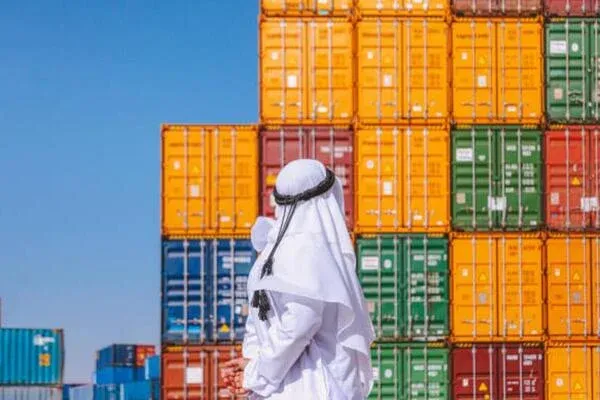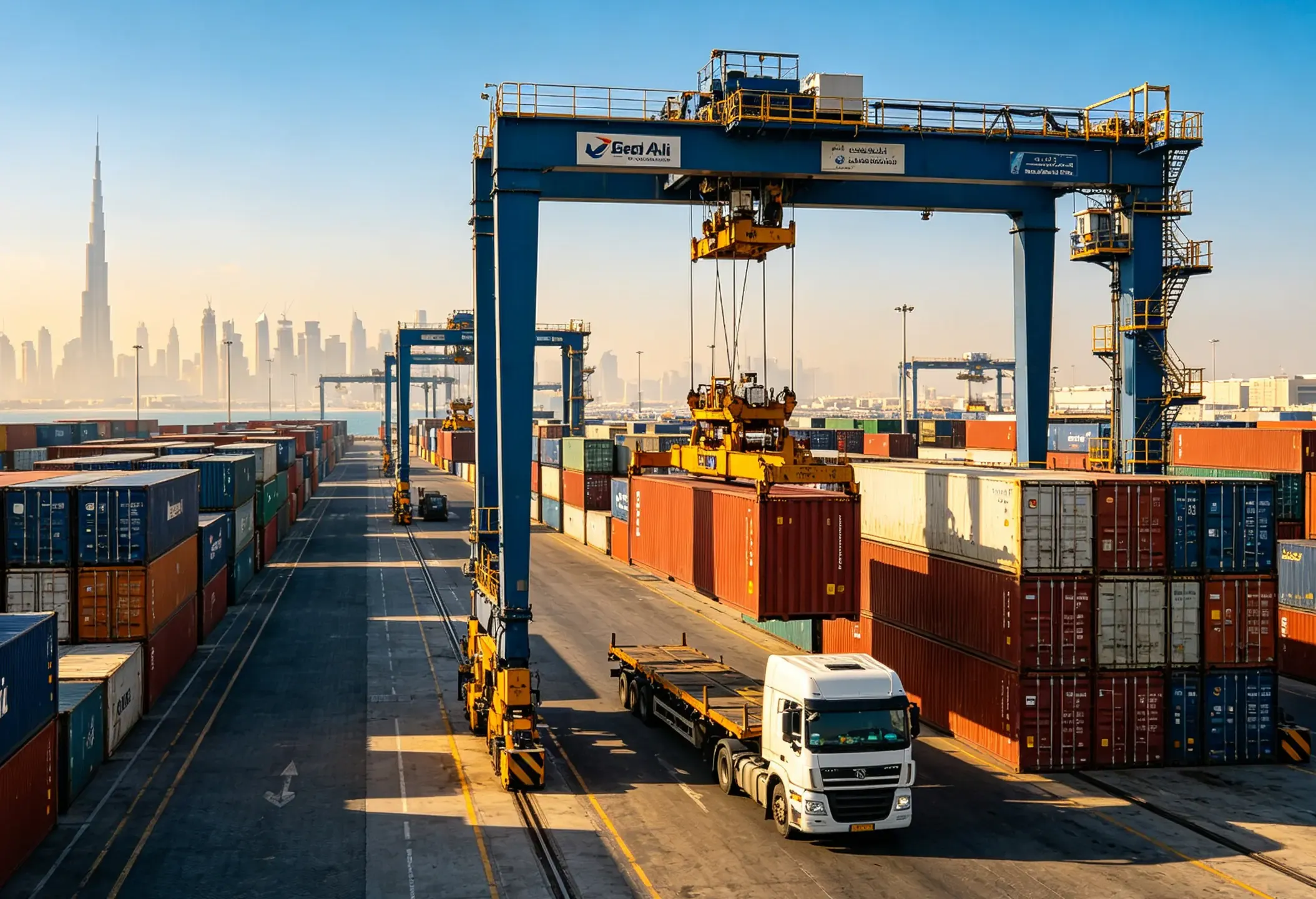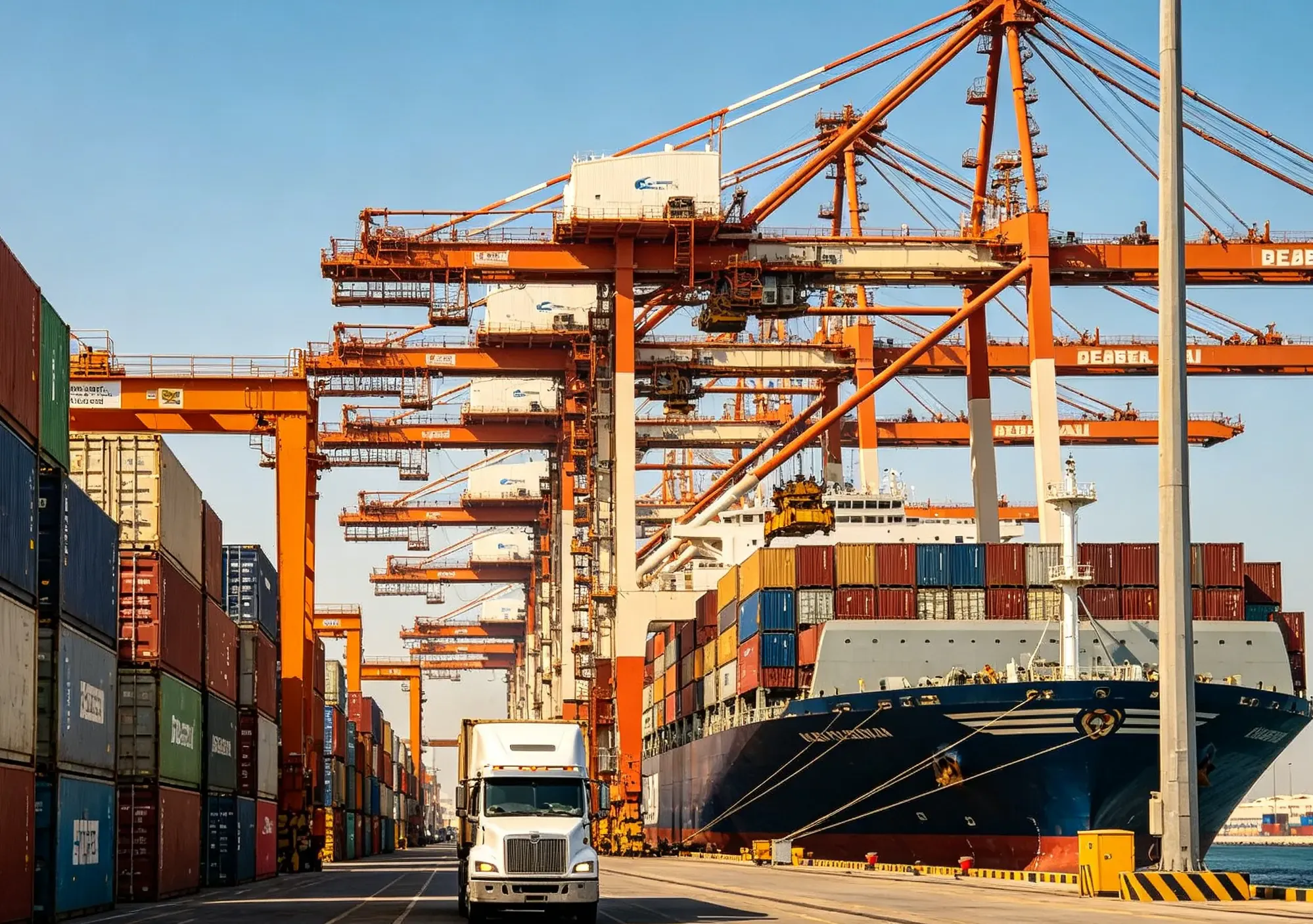
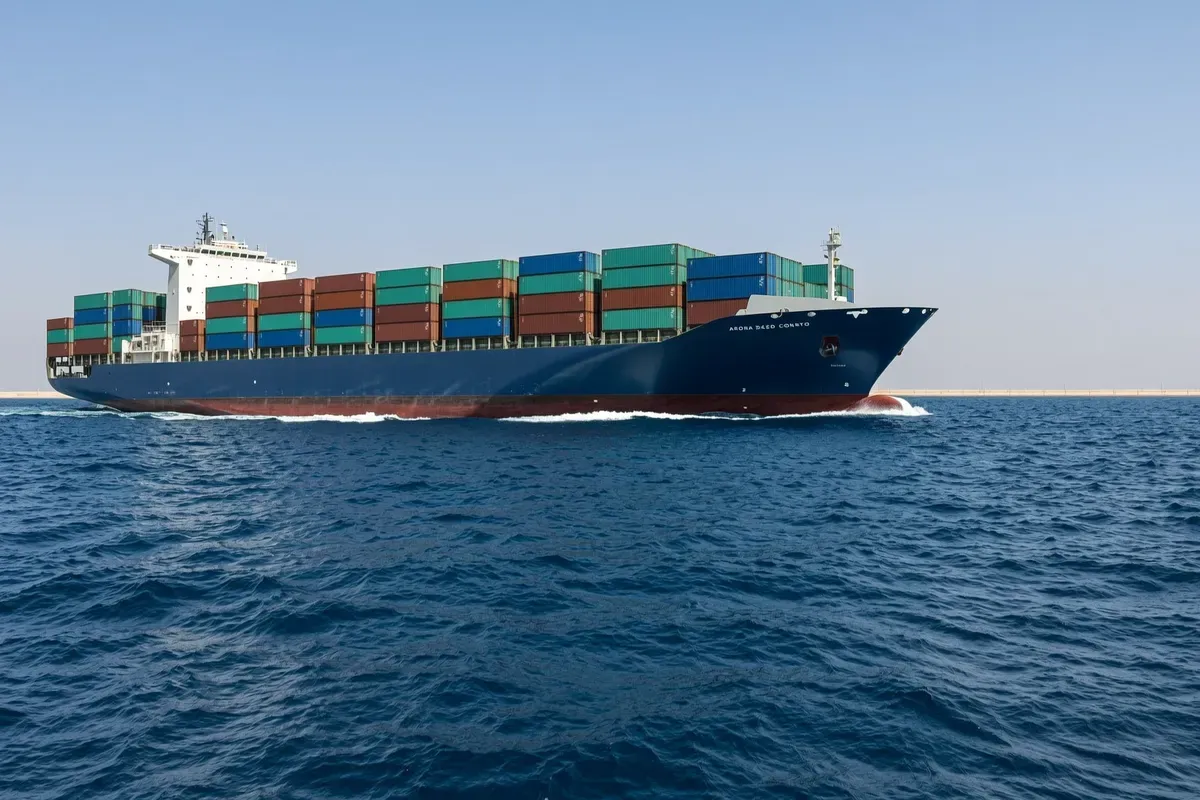
Are you trying to work out whether sea shipping from China to Dubai is still the low-cost, predictable option it used to be — and why one quote says Jebel Ali while another routes your container through Khor Fakkan or Fujairah? The short answer is that sea freight remains the only economical way to move serious volume into Dubai, but the November 2026 market is not the normal China–UAE lane. With the Strait of Hormuz still disrupting mainline container services, the cheapest ocean rate is not always the cheapest delivered cost, and the fastest port on the map is not always the fastest port in practice.
This guide breaks down what sea shipping from China to Dubai costs right now, how long it really takes door to door, which gateway makes sense for mainland Dubai versus JAFZA, and what Dubai Customs will ask for before release. We have arranged China–UAE cargo out of Shenzhen since 2018, so the numbers below are planning bands from live market conditions — not a recycled annual average. For the broader lane overview, start with our shipping from China to UAE page; this article goes deeper on Dubai itself.
What Does Sea Shipping from China to Dubai Mean in November 2026?
Sea shipping from China to Dubai now usually means one of two routings: a limited direct call into Jebel Ali at a premium, or discharge at Khor Fakkan or Fujairah on the UAE east coast followed by bonded road transfer into Dubai. The old assumption that every China–Dubai container automatically lands at Jebel Ali no longer holds for every booking.
Jebel Ali is still Dubai’s primary container gateway and the natural port for JAFZA, mainland Dubai, Sharjah, and northern-emirates distribution. The change is how cargo gets there. Carrier advisories in November 2026 describe congestion at Khor Fakkan, high yard utilization at Fujairah, bonded landside transfers for Jebel Ali-bound cargo, and an extra $1,000 per container on vessels that transit the Strait of Hormuz. In plain English: your forwarder may still sell “China to Dubai,” but the physical route can be China port → east-coast UAE terminal → bonded truck → Dubai warehouse or free zone.

That is why the first question is no longer “which port is closest?” It is “which route is my quote actually buying?” A low quote into Khor Fakkan can be good value if bonded transfer, customs coordination, and final delivery are already included. It can also become expensive if your buyer expected Jebel Ali discharge and nobody budgeted the road leg, storage, or extra clearance handling.
How Much Does Sea Shipping from China to Dubai Cost Right Now?
As of November 2026, indicative sea freight from China to Dubai ranges from about $2,800–$4,100 for a 20GP routed through the UAE east coast, while accepted direct Jebel Ali bookings are being quoted around $5,157–$6,303 for a 20GP and $6,930–$8,470 for a 40GP before any separate Hormuz transit fee. LCL ocean pricing can still look low per CBM, but the all-in cost rises fast once CFS, bonded transfer, clearance, and delivery are added.
| Option | Current Planning Band | Practical Transit | Best For | Watch Out For |
|---|---|---|---|---|
| FCL 20GP via Khor Fakkan / Fujairah + bonded road | $2,800–$4,100 | 18–34 days door to door | Cost-controlled cargo that can absorb buffer days | Waiting time, landbridge handling, storage |
| FCL 20GP direct Jebel Ali, when accepted | $5,157–$6,303 + possible $1,000 fee | 12–18 days sailing; 20–30 days door to door | Urgent FCL, JAFZA stock, tight delivery windows | Premium pricing and carrier acceptance limits |
| FCL 40GP / 40HQ direct Jebel Ali, when accepted | $6,930–$8,470 + possible $1,000 fee | 12–18 days sailing; 20–32 days door to door | Bulky cargo, consolidated programs | Equipment availability and peak surcharges |
| LCL sea freight | $50–$130 per CBM ocean/CFS basis; $120–$180 per CBM DDP | 22–35 days door to door | 1–14 CBM, mixed supplier orders | Minimum charges, W/M billing, deconsolidation delays |
These bands are indicative, not quotations. They exclude UAE duty and VAT unless explicitly marked DDP, and they can move within two to three weeks as fuel, capacity, port congestion, and security surcharges change. Our September UAE shipping cost breakdown quoted lower August–September bands; November has repriced the Gulf lane upward, so use this article for current Dubai planning and the earlier guide for the underlying cost formula.
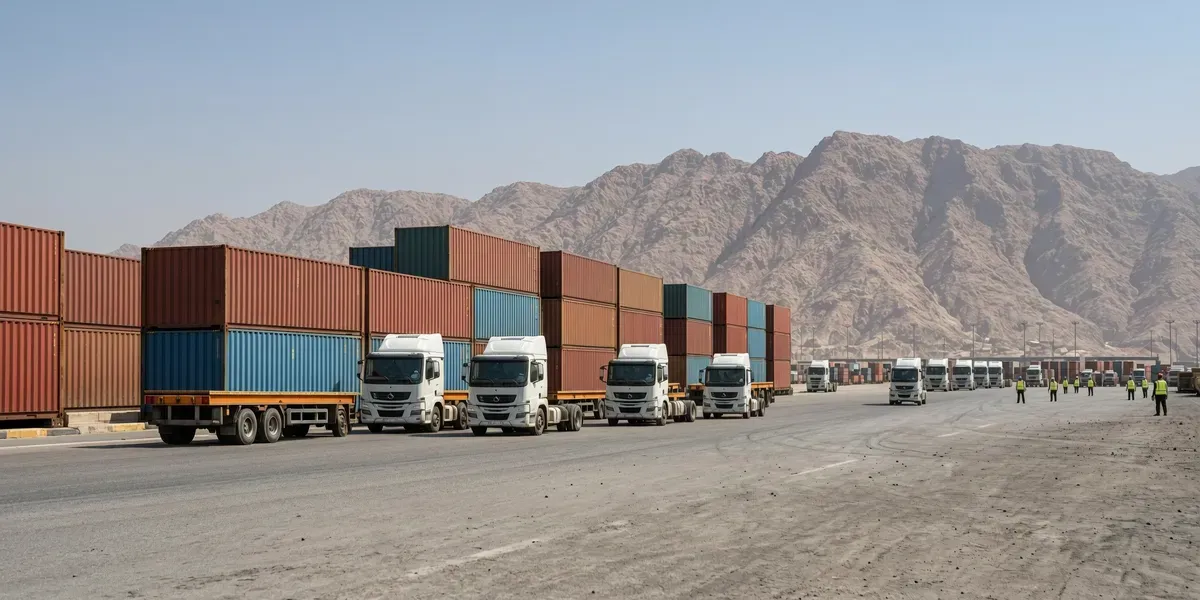
The rate you should compare is the delivered one. Ask every forwarder to state the discharge port, whether the price is port-to-port or door-to-door, whether the bonded transfer is included, whether any Hormuz transit fee applies, and how many free days you have before demurrage starts. A $3,900 quote with the road leg included can beat a $3,100 quote that leaves your container sitting outside Dubai while three separate vendors invoice you.
What Does the Landed Cost Look Like on a Real 20GP?
On a $20,000 general-cargo shipment, the cheaper east-coast routing can still land near $7,208 in charges before inventory value, while a premium direct Jebel Ali routing can reach about $10,740 once the transit fee and higher freight are taxed through the CIF base. The tax line is the part many buyers miss: UAE duty and VAT are calculated from a value that includes freight, so a more expensive routing also raises the tax bill.
Here is the worked example, using the high end of the current 20GP bands and standard 5% duty plus 5% VAT:
| Cost Component | East-Coast Gateway | Direct Jebel Ali Call |
|---|---|---|
| Goods value | $20,000 | $20,000 |
| Ocean / routing freight | $4,100 | $7,303 |
| Cargo insurance | $80 | $80 |
| Origin charges | $200 | $200 |
| Destination delivery | $350 | $350 |
| CIF tax base | $24,180 | $27,383 |
| Customs duty, 5% of CIF | $1,209 | $1,369 |
| VAT, 5% of CIF + duty | $1,269 | $1,438 |
| Landed charges, excluding goods | $7,208 | $10,740 |

The direct routing costs about $3,532 more before any demurrage, storage, or delay cost. That does not make it wrong. If your cargo is JAFZA-bound, time-sensitive, or exposed to stock-out penalties, paying for certainty can be rational. The mistake is comparing the two routings as if they were the same product.
How Long Does Sea Shipping from China to Dubai Take?
Plan on 20–30 days door to door for an accepted direct Jebel Ali FCL movement and 18–34 days for an east-coast discharge plus bonded road transfer, with LCL typically taking 22–35 days because consolidation and deconsolidation add time. Port-to-port sailing time is only the middle slice of the schedule.
| Routing | Port-to-Port Ocean Leg | Buffer / Transfer | Customs + Delivery | Planning Window |
|---|---|---|---|---|
| South China → Jebel Ali direct | 12–18 days | 0–3 days | 3–7 days | 20–30 days |
| East/North China → Jebel Ali direct | 18–26 days | 0–3 days | 3–7 days | 24–36 days |
| China → Khor Fakkan / Fujairah → Dubai | 15–26 days | 3–8 days | 3–7 days | 18–34 days |
| LCL China → Dubai | 18–28 days | 4–7 days CFS | 3–7 days | 22–35 days |
For the normal lane-by-lane baseline, our guide on how long shipping from China to UAE takes is still the reference. The current Dubai adjustment is simple: add buffer unless your booking confirmation names Jebel Ali as the discharge port and states that the carrier will transit Hormuz. If the confirmation says Khor Fakkan or Fujairah, your cargo is not delayed — it is on the route you bought.
Three habits protect the timeline. First, ask whether the quoted transit is port-to-port, door-to-door, or “to available warehouse.” Second, pre-clear documents before arrival so the free-time clock is not wasted on paperwork. Third, avoid a Friday arrival when your consignee cannot receive or your broker cannot file until the next working window.
Which Dubai Gateway Should You Choose: Jebel Ali, Khor Fakkan, Fujairah, or JAFZA?
Choose Jebel Ali when you can get an accepted direct booking and time matters; choose Khor Fakkan or Fujairah when cost control matters more and your consignee can handle a bonded transfer; choose JAFZA delivery when the cargo is for re-export, regional distribution, or free-zone inventory rather than immediate mainland sale. The right gateway is the one that matches both the cargo plan and the customs path.
| Gateway | Where It Sits | Best Use | Current Planning Note |
|---|---|---|---|
| Jebel Ali | Inside the Gulf, beside JAFZA | Mainland Dubai, JAFZA, re-export hub cargo | Fastest when a direct call is accepted, but premium-priced |
| Khor Fakkan | UAE east coast, outside Hormuz | Dubai and northern-emirates FCL | Major relief gateway; expect waiting and bonded road time |
| Fujairah | UAE east coast, outside Hormuz | Overflow FCL and flexible routing | Useful when Khor Fakkan is congested |
| JAFZA | Free zone connected to Jebel Ali | Re-export, regional stock, duty-suspended inventory | Duty timing changes when goods enter mainland UAE |
If you are selling into mainland Dubai immediately, free-zone entry is not a loophole. It is a different customs path. Cargo can be stored in JAFZA for regional distribution, but once it crosses into the local UAE market, the mainland duty and VAT treatment applies. That distinction should be settled before the container moves, not after your buyer asks why the release invoice looks different.
For cargo that cannot be containerized — vehicles, rolling machinery, oversized project units — container routing is the wrong tool altogether. Our RoRo shipping from China to UAE guide covers that separate mode.
FCL vs LCL to Dubai: Where Is the Break-Even Now?
LCL usually wins below 12–14 CBM, FCL usually wins from about 15 CBM upward, and the current disruption makes the break-even less about ocean rate and more about destination handling, free time, and how many separate parties touch the cargo. If your LCL shipment needs bonded transfer anyway, the per-CBM savings can disappear quickly.
| Shipment Size | Likely Better Option | Why |
|---|---|---|
| Under 8 CBM | LCL | Lowest cash outlay; acceptable for samples and small restocks |
| 8–14 CBM | LCL or DDP LCL | Compare all-in DDP against bare ocean plus local charges |
| 15–20 CBM | FCL 20GP | Dedicated equipment reduces handling and release risk |
| 22 CBM and above | FCL 20GP or 40HQ | Per-CBM cost drops and the schedule is easier to control |
Dense cargo breaks the rule. Tiles, stone, metal parts, and machinery can hit payload limits before they fill the box, so a 20GP may be correct even at modest volume. Light, bulky cargo behaves the opposite way: furniture, foam products, and textiles often justify a 40HQ because the extra cube matters more than the extra freight. For the deeper container-side math, see our FCL shipping from China to UAE guide.
One operational note: LCL is billed on W/M — weight or measure, whichever is greater. Three CBM of dense hardware weighing 4,200 kg is not billed as three CBM. It is billed as 4.2 revenue tonnes, and that surprise usually arrives after the cargo is already in the CFS.
What Documents and Customs Steps Does Dubai Require?
Dubai sea imports normally require a registered importer code, a Mirsal 2 customs declaration, commercial invoice, packing list, bill of lading, delivery order, and certificate of origin, with permits added for regulated goods. Most mainland commercial goods pay 5% customs duty on CIF value and 5% VAT on the duty-inclusive amount.
The cleanest document pack is boring. The invoice value, packing list weights, HS codes, consignee name, and bill of lading details should all tell the same story. Dubai Customs’ published guide lists the sea-channel documents clearly, including the bill of lading, commercial invoice, certificate of origin, packing list, delivery order, and permits where applicable. The UAE government’s customs guidance confirms the standard 5% duty treatment for most goods, with alcohol and tobacco as notable exceptions.
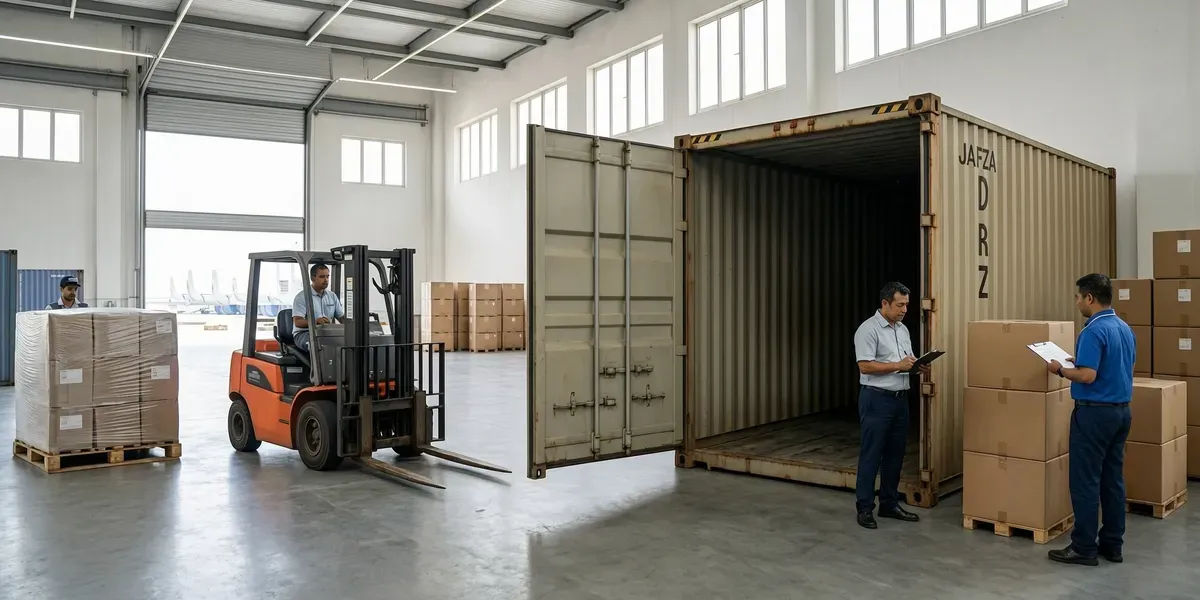
Use this checklist before the vessel sails:
- Confirm the importer setup. Mainland importer with a customs code, free-zone consignee, or DDP importer-of-record structure.
- Lock the HS codes. Duty, restrictions, and permit requirements all flow from classification.
- Match the documents. Invoice, packing list, B/L, and CoO must align on quantities, weights, and values.
- File through Mirsal 2 before arrival. Pre-clearance is the easiest way to protect free time.
- Budget duty and VAT up front. A VAT-registered importer may recover import VAT, but cash still has to be available at release.
If your team does not have a UAE entity, a door to door shipping or DDP structure can put pickup, export clearance, freight, import clearance, duty, VAT, and delivery under one invoice. If you do have a UAE trade license and TRN, controlling clearance yourself usually gives better transparency and lets you reclaim input VAT.
How Can You Keep Dubai Sea Freight Costs and Delays Under Control?
The best cost-control move is to standardize the quote scope before comparing prices; the best delay-control move is to finish customs preparation before the container reaches the UAE. Everything else supports those two.
- Make every quote name the discharge port. Jebel Ali, Khor Fakkan, and Fujairah are not interchangeable in November 2026. If the quote does not say, ask.
- Ask for the bonded transfer line item. A low ocean rate without the road leg is not a Dubai delivered rate.
- Negotiate free time at booking. Five to seven days disappears fast when trucking, inspections, or weekend timing slip; 10–14 days is worth more than a small discount.
- Consolidate small orders above 15 CBM. Multi-supplier LCL often pays three sets of minimum charges that one 20GP avoids.
- Use FOB or DDP deliberately. FOB gives you control of freight and destination cost; DDP gives you one delivered number. CIF is where buyers most often inherit bad routing and surprise destination fees.
- Pre-clear Mirsal 2 and permits early. Demurrage and detention do not care that the missing document was “almost ready.”
- Insure the routing you actually bought. If the cargo moves by sea and bonded road, the insurance should reflect the full chain, not only the ocean leg.
For recurring volume, a China-side buffer helps too. Consolidating in a Shenzhen or Guangzhou warehouse lets you split urgent and non-urgent cargo, hold a small safety stock, and avoid booking every carton at the worst moment.
Frequently Asked Questions About Sea Shipping from China to Dubai
Is Jebel Ali still receiving containers from China?
Yes, but direct accepted calls are limited and priced at a premium in November 2026. Many shipments discharge at Khor Fakkan or Fujairah and move into Dubai under bonded transfer.
What is the cheapest sea freight option from China to Dubai?
For shipments under about 12–14 CBM, LCL is usually cheapest. Above roughly 15 CBM, a 20GP FCL usually wins once destination handling, CFS fees, and delay risk are included.
How much customs duty will I pay in Dubai?
Most mainland commercial goods pay 5% duty on CIF value plus 5% VAT on the duty-inclusive amount. Some categories are zero-rated, exempt, or subject to higher excise treatment, so HS classification matters.
Do I need a UAE company to import by sea?
Not always. You can use a licensed consignee, a free-zone structure, or a DDP service where the forwarder manages import formalities, but your own trade license and TRN give you the cleanest VAT recovery path.
How far is Khor Fakkan or Fujairah from Dubai?
Roughly 130 km by road, but the practical delay is not just distance. Waiting, bonded transfer scheduling, customs coordination, and delivery windows commonly add three to eight days.
Should I book sea or air for Dubai right now?
Sea remains the right default for commercial volume. Air is for the 10–20% of SKUs that cannot stock out, for samples, and for cargo whose margin can absorb several dollars per kilogram.
Bottom Line: Book the Route, Not Just the Rate
Sea shipping from China to Dubai is still the backbone of the lane, but the November 2026 booking decision is more specific than it used to be. Know whether you are buying Jebel Ali direct or an east-coast gateway plus bonded road. Budget duty and VAT from the CIF value, not from the invoice value alone. Protect free time before the vessel sails, and treat any quote without a named discharge port as incomplete.
If you want a Dubai quote that shows the ocean leg, bonded transfer, clearance, duty, VAT, and delivery in one scope, Efanda Logistics has managed China–UAE shipments from Shenzhen since 2018. We will tell you which routing fits the cargo, what can wait, and what cannot. Call +86 18929345880 to plan your next China to Dubai sea shipment before the next rate window closes.

Written by the EFANDA Logistics team — a Shenzhen-based freight forwarder established in 2018, moving cargo from China to ports worldwide with end-to-end pickup, consolidation, customs and door delivery.About us