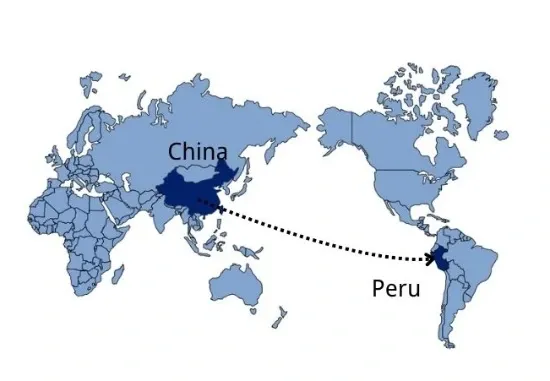
Shipping from China to Peru used to have one answer, and it was Callao. That changed in November 2024, when the Chancay terminal opened about 80 kilometres north of Lima with direct calls from Chinese ports and a published Shanghai transit of around 23 days — closer to the Mediterranean lanes than to the old five-week Pacific crossing. Importers who still plan on a five-week ocean leg and a single Callao option are now leaving both time and money on the table, and importers who switched without checking how cargo moves inland from Chancay have discovered a different set of problems.
This guide is written from the operating side of the route: how sea and air freight from China to Peru is priced, which port pairs actually work now that two gateways compete, what the ad valorem duty, IGV and municipal tax really cost on a shipment, how the China–Peru free trade agreement changes the math, and where importers most often lose money. China has been Peru’s largest trading partner for more than a decade, and the cargo mix runs from machinery, vehicles, solar modules and batteries to textiles, footwear, toys and e-commerce parcels — each of which behaves differently at customs.
Sea Freight From China to Peru
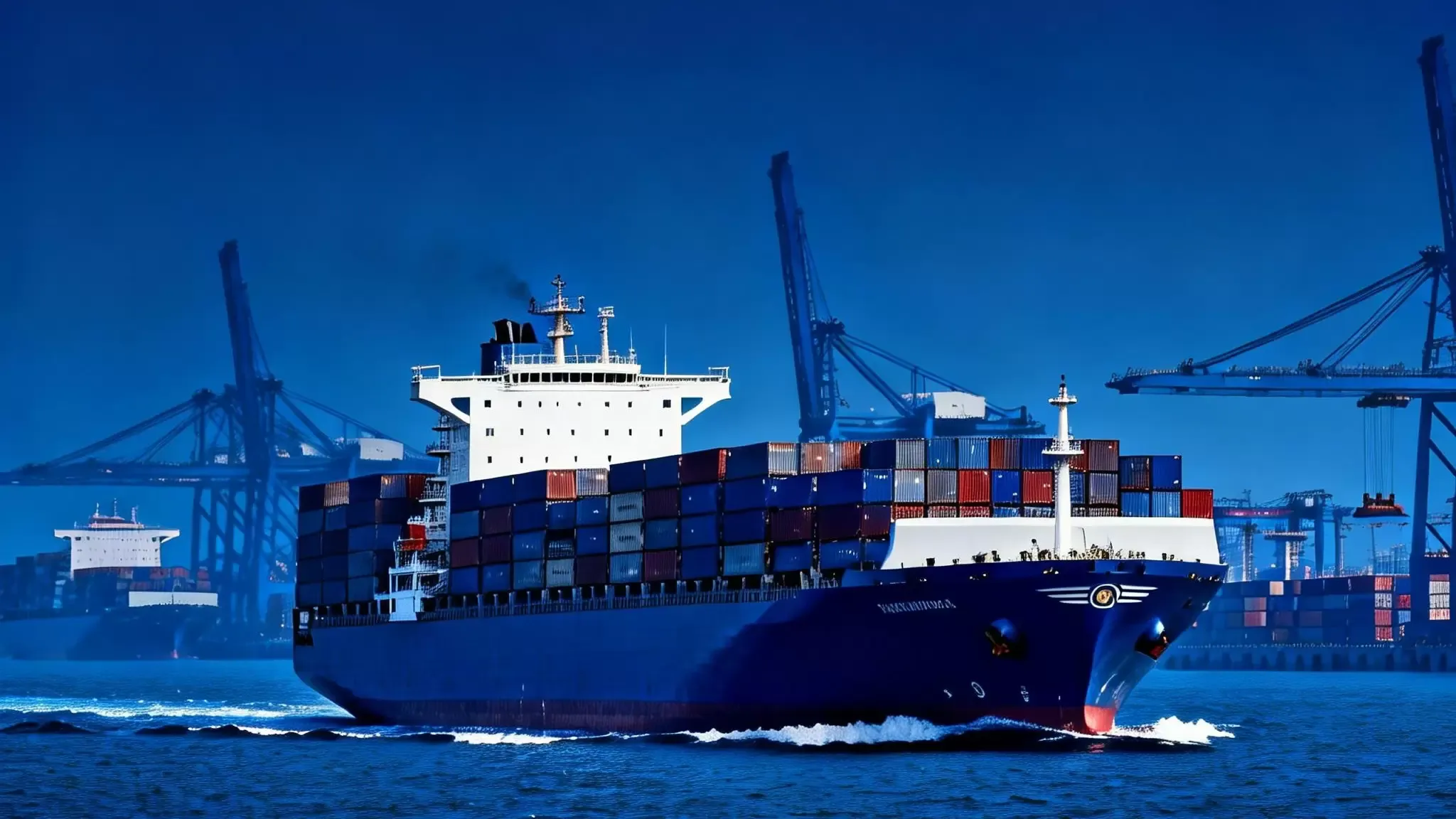
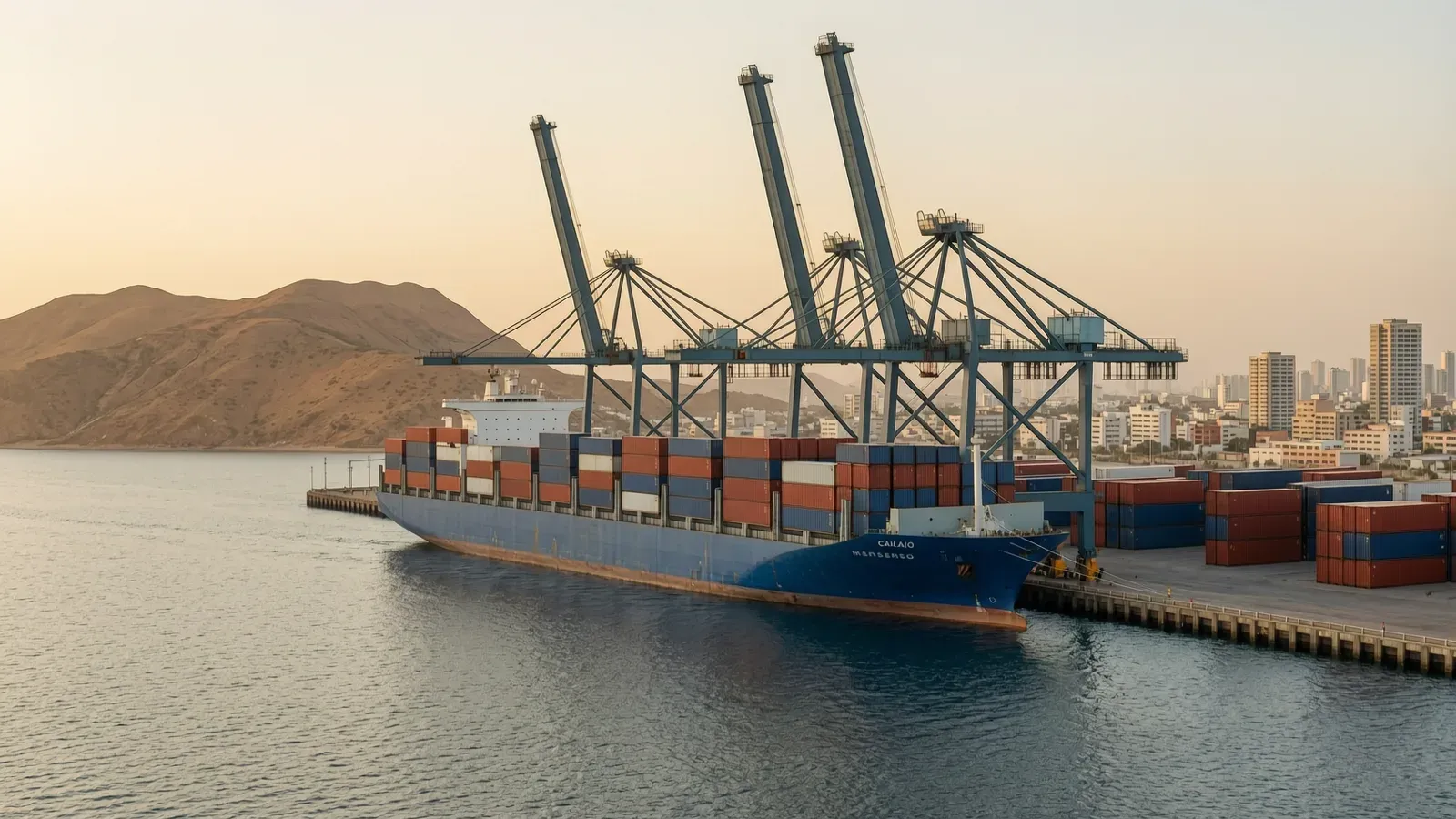
Sea freight from China to Peru is the default for anything above roughly 15 CBM: furniture, machinery, building materials, vehicle parts, solar modules, textiles and full production runs. Container services leave Shanghai, Ningbo, Shenzhen, Qingdao, Tianjin and Xiamen and reach the Peruvian coast in three to six weeks, either on direct crossings into Chancay and Callao or through a relay at Busan, Manzanillo, Cartagena or Kingston. The relay is cheaper per container and adds one handling point, which is where transit windows quietly stretch.
The commercial detail most rate sheets hide is the imbalance of the lane. Peru exports copper, fishmeal, grapes, avocados and blueberries to Asia, so reefer equipment and vessel space are tight during the southern fruit season, and empty repositioning costs get folded into your southbound rate. Booking four to six weeks ahead on the southbound leg usually costs less than booking two weeks ahead, and it protects you from equipment shortages in the weeks before the grape and blueberry harvests.
When to Choose Sea Freight
- Your shipment exceeds 15 CBM or 2 tonnes and cost per unit matters more than speed
- A four to seven week door-to-door window fits your inventory plan
- You need a full container, a shared LCL slot, reefer capacity or RoRo space for vehicles and machinery
- The goods are non-perishable and tolerate humidity and multiple handling points
Typical cargo on this lane: household goods and furniture, industrial machinery and spare parts, ceramics and building materials, textiles and footwear, automotive parts, solar panels and lithium batteries (subject to carrier dangerous goods rules), and project cargo for mining and infrastructure sites.
Sea Freight vs Air Freight from China to Peru
| Factor | Sea Freight | Air Freight |
|---|
| Cost per kg | Lowest | Highest |
|---|
| Transit time | 28–40 days | 4–8 days |
|---|
| Minimum sensible load | 15 CBM or 2 tonnes | 50–100 kg |
|---|
| Cargo restrictions | Broadest | Battery, liquid and DG limits |
|---|
| Best for | Volume and heavy goods | Urgent and high-value goods |
|---|
Key Ports and Routes
China origin ports: Shanghai, Ningbo, Shenzhen (Yantian and Shekou), Guangzhou/Nansha, Qingdao, Tianjin and Xiamen.
Peruvian destination ports: Chancay (the new deep-water terminal north of Lima, built for vessels up to 18,000 TEU and served directly from Asia), Callao (DP World’s south terminal and APM Terminals’ north terminal, together the country’s largest container complex), Paita (Piura, the north coast and the Ecuador border trade), Salaverry (Trujillo and La Libertad), Matarani (Arequipa and southern Peru, including Bolivian transit traffic), Ilo (Moquegua) and Pisco (Ica) by arrangement.
Indicative sea freight transit times, China to Peru
| Origin port | Peruvian port | Transit time |
|---|
| Shanghai | Chancay | 23–28 days |
|---|
| Ningbo | Chancay | 24–30 days |
|---|
| Shenzhen | Callao | 30–38 days |
|---|
| Shanghai | Callao | 28–35 days |
|---|
| Qingdao | Callao | 32–40 days |
|---|
| Shanghai | Paita | 30–36 days |
|---|
| Ningbo | Matarani | 33–40 days |
|---|
Add five to eight days when the routing relays at Busan or Manzanillo, and add three to seven days when Callao is congested at the start of the fruit season. Chancay’s advantage is schedule discipline as much as distance: a direct call with no relay removes the single most common source of unknown delay on this lane.
FCL, LCL and RoRo
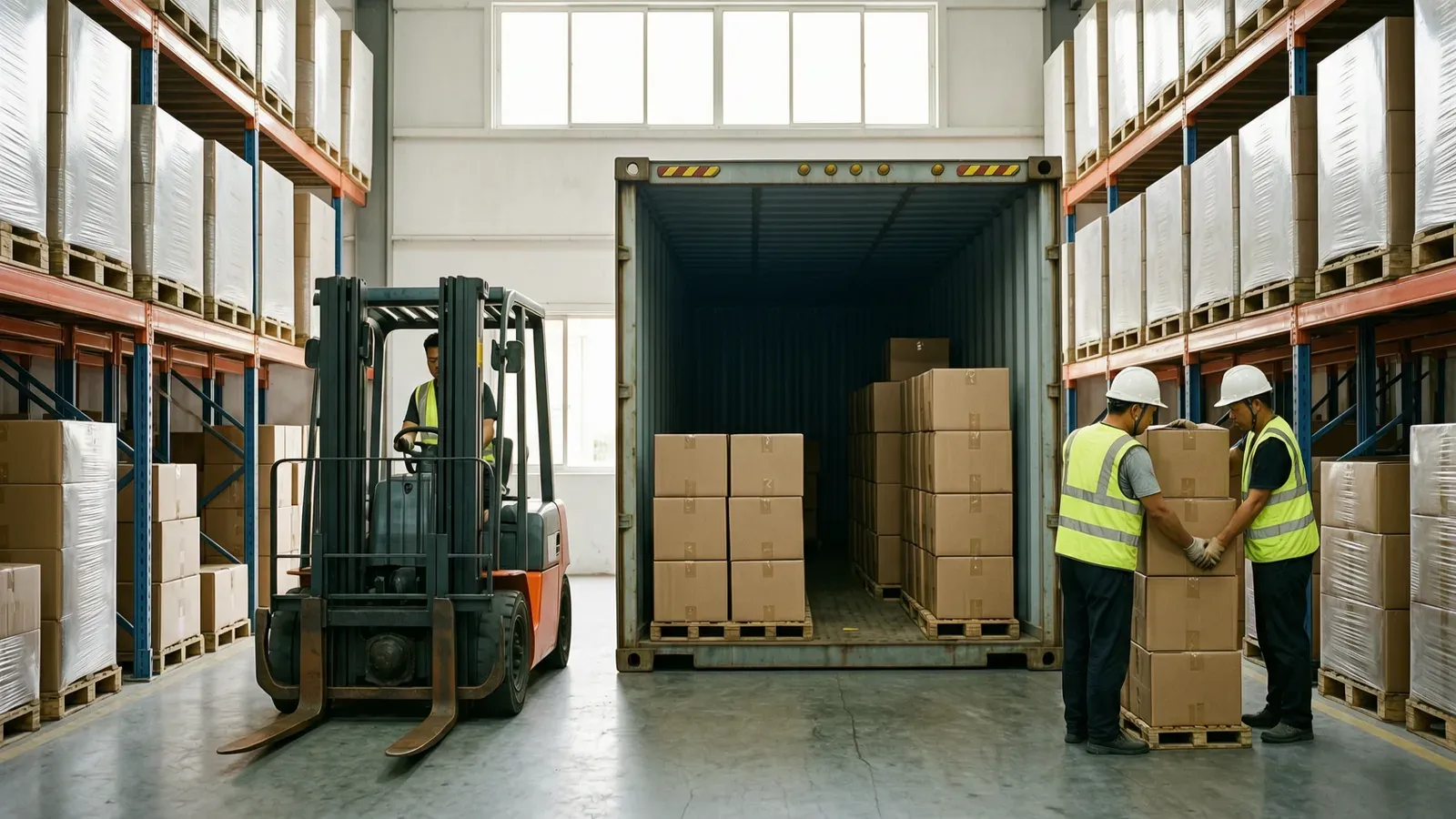
FCL (full container load). A 20ft, 40ft or 40HQ container used exclusively for your cargo. Lowest cost per CBM above roughly 15 CBM, least handling and the lowest damage risk. The standard choice for machinery, furniture sets and repeat orders into Lima, Callao and the industrial parks along the Panamericana.
LCL (less than container load). Your cargo shares a container and is deconsolidated at a Callao warehouse. Sensible below 15 CBM, but the door-to-door window is longer and the destination charges (CFS, documentation, delivery order) can surprise first-time importers. LCL still runs mostly through Callao, not Chancay, which is one reason to compare both.
RoRo (roll-on/roll-off). For cars, vans, trucks, buses and self-propelled machinery. Peru is one of the fastest-growing markets in South America for Chinese vehicles, and RoRo is usually the cheapest way to move a single unit — but book early, because vessel space on this leg sells out during model-year launches. High-and-heavy RoRo covers excavators and mining equipment.
Air Freight From China to Peru
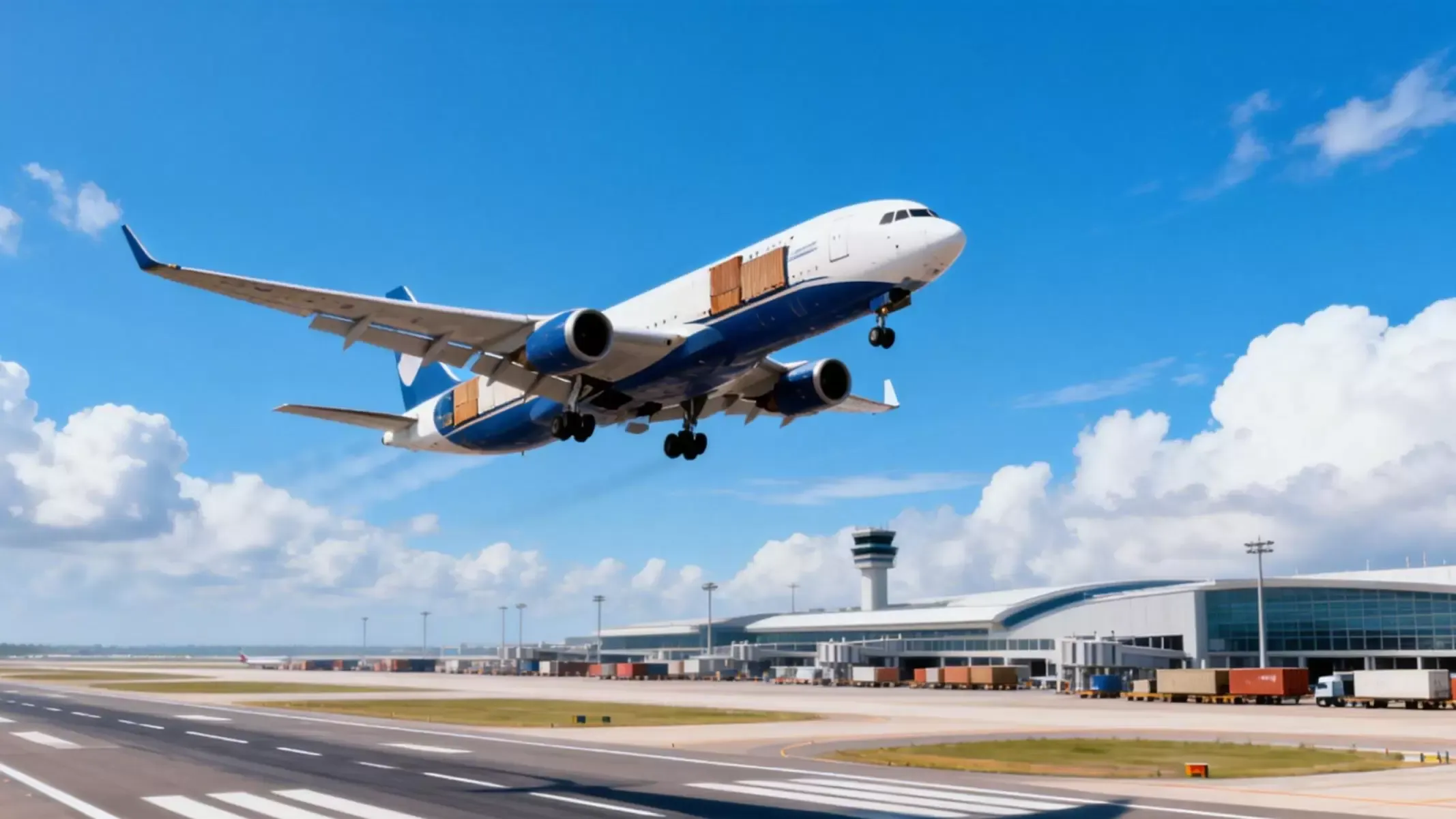
Air freight from China to Peru is the only sensible option when a shipment is urgent, small or high-value. There is no direct freighter network of the depth you find into Europe or the Middle East, so most cargo travels on one-stop routings: Shanghai or Shenzhen to a Gulf, European or North American hub, then on to Lima. That stop is why door-to-door air transit into Peru is measured in days rather than in hours.
Lima’s Jorge Chávez airport entered a new phase in mid-2025 with the opening of its new terminal and a dedicated tier-one cargo warehouse, the first stage of an integrated sea–land–air corridor with Chancay. In practice that means more capacity, faster handling and a genuine sea-air option: ocean to Chancay, bonded transfer, then air to a secondary city or an inland customer.
Air is the right mode when stockout cost exceeds freight cost: electronics, fashion drops, exhibition materials, spare parts for a stopped production line, and samples. It is rarely the right mode for furniture, ceramics or anything above roughly 500 kg that can wait four weeks.
Key Airports and Routes
Chinese airports: Shanghai Pudong (PVG), Guangzhou Baiyun (CAN), Shenzhen Bao’an (SZX), Beijing Capital and Daxing (PEK/PKX), Hong Kong (HKG) and Chengdu Tianfu (TFU).
Peruvian airports: Lima Jorge Chávez (LIM) carries virtually all international cargo, with domestic connections to Arequipa (AQP), Cusco (CUZ), Trujillo (TRU), Piura (PIU) and Iquitos (IQT).
Indicative air freight transit times, China to Peru
| Route | Transit time | Notes |
|---|
| Shanghai → Lima | 3–5 days | One stop via a Gulf, European or US hub |
|---|
| Shenzhen → Lima | 4–6 days | Electronics consolidation |
|---|
| Guangzhou → Lima | 3–6 days | Belly capacity dependent |
|---|
| Hong Kong → Lima | 3–6 days | Frequent one-stop options |
|---|
| Shanghai → Arequipa | 5–8 days | Via LIM plus domestic leg |
|---|
Transit above is airport to airport. Door to door adds pickup in China, export clearance, import clearance at LIM and domestic trucking — plan 4–8 days end to end, and more if the goods need SENASA or DIGEMID review.
Door to Door Shipping From China to Peru
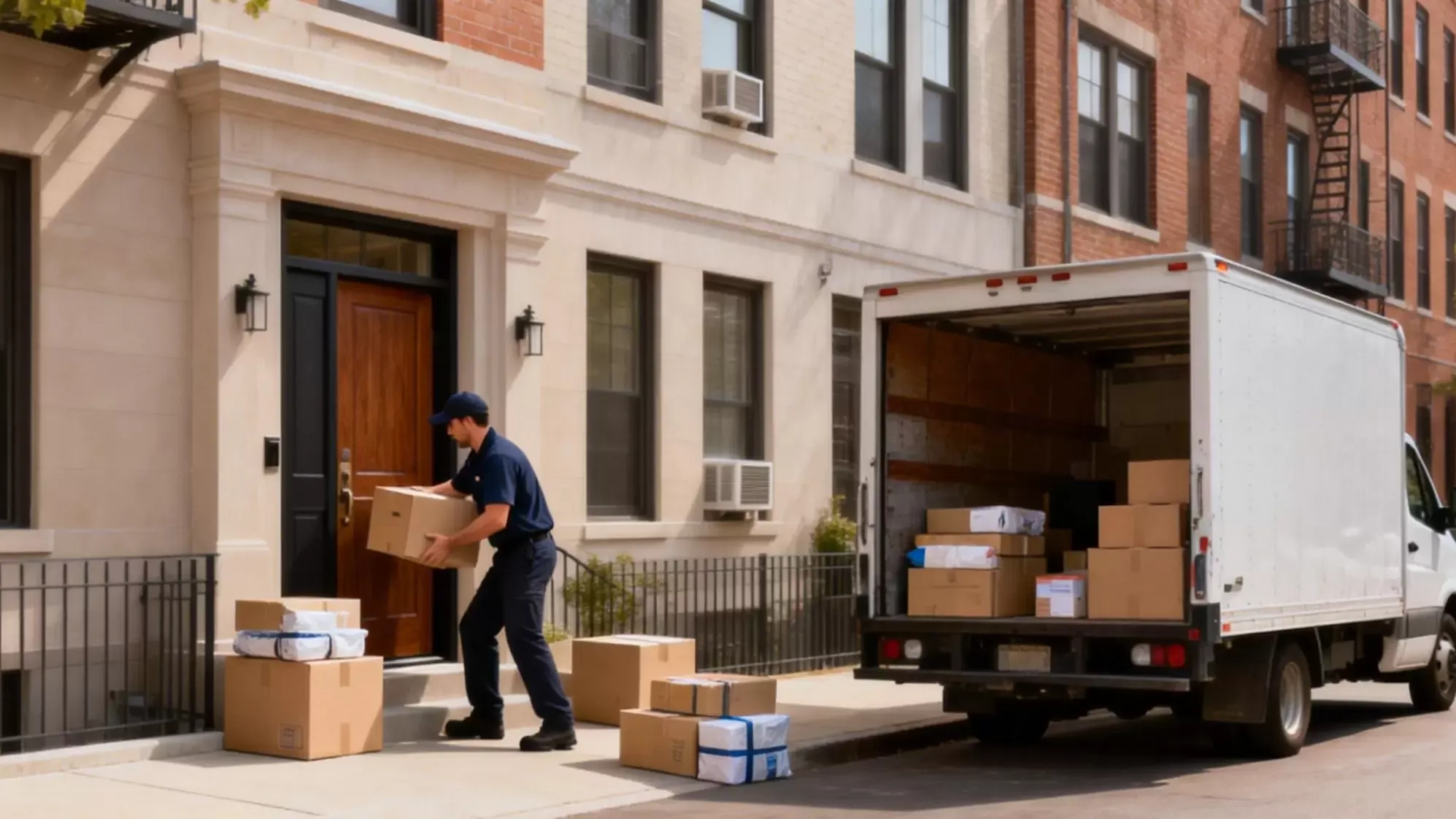
Door-to-door shipping from China to Peru puts the whole chain under one contract: supplier pickup, export declaration in China, main carriage, Peruvian import clearance, duty and IGV settlement, and delivery to your warehouse, store or project site. For importers without a customs department, it is usually the difference between a shipment that arrives and one that sits at Callao accruing storage.
What a properly quoted door-to-door service includes:
- Pickup from the supplier, with a check of packing marks and carton counts
- Export clearance and, where applicable, a China–Peru FTA certificate of origin
- Sea or air main carriage
- Customs declaration (DAM) filed by a licensed Peruvian customs broker
- Duty, IGV and IPM settlement, plus any anti-dumping or specific duties
- Delivery to the final address, with unloading arranged in advance
Door-to-door process, China to Peru
| Step | What happens | Owner |
|---|
| Booking | Space, mode and Incoterm confirmed | Efanda |
|---|
| Pickup | Cargo collected and checked at origin | Efanda origin team |
|---|
| Export | Declaration and origin certificate filed in China | Efanda |
|---|
| Main carriage | Sea or air | Carrier |
|---|
| Import clearance | DAM filed, duty and IGV paid | Peruvian broker |
|---|
| Delivery | Trucked to the final address | Efanda partner |
|---|
Two Peruvian details decide the design of any DDP shipment. First, the importer of record must hold an active RUC, and the declaration must be filed by a licensed customs broker — a foreign seller cannot simply declare its own goods and pay the tax. Second, Peru allows advance clearance (despacho anticipado) from up to fifteen days before the vessel arrives, so a shipment whose documents are complete can be released almost as the container comes off the ship. DDP therefore runs through a registered importer-of-record arrangement — your Peruvian entity, your buyer, or a partner of record that we coordinate — with duty, IGV and IPM itemized before the cargo sails.
Shipping Costs From China to Peru
Shipping costs from China to Peru are built from four blocks: origin charges (pickup, export declaration, CFS handling), main freight, destination charges (terminal handling, documentation, delivery order, storage) and duty plus IGV. Most importer complaints trace back to comparing only the middle block and being surprised by the other three.
Main freight moves with the market. Rates on the Pacific lane react to equipment availability, fuel surcharges and the fruit season within weeks, and the arrival of Chancay capacity has made the direct-service price more competitive than the old relay-only structure. Treat the ranges below as planning benchmarks, not quotes.
Indicative sea freight cost ranges, China to Peru, November 2026
| Service | Indicative range | Best for |
|---|
| 20ft FCL | USD 2,200 – 3,900 | 10–28 CBM of dense cargo |
|---|
| 40ft / 40HQ FCL | USD 3,400 – 5,800 | 25–65 CBM, furniture and machinery |
|---|
| LCL | USD 90 – 165 per CBM | 2–15 CBM, test orders |
|---|
| RoRo | Quoted per vehicle | Cars, vans, wheeled machinery |
|---|
Indicative air freight cost ranges, China to Peru, November 2026
| Shipment size | Indicative range | Typical use |
|---|
| 50–100 kg | USD 6.5 – 9.5 per kg | Samples, documents, spare parts |
|---|
| 100–300 kg | USD 5.5 – 8 per kg | Electronics, apparel restock |
|---|
| 500 kg and above | USD 5 – 7.5 per kg | Commercial cargo, negotiated |
|---|
All figures are indicative ranges as of November 2026 and exclude duty, IGV, IPM and cargo insurance. They move weekly with fuel, capacity and season, and they are quoted per shipment, not per container type in the abstract. The bands sit slightly below the Chile lane because the direct Chancay call removes a relay — but Paita and Matarani cargo usually pays more, since it needs a feeder leg or an overland move.
Shipping Time From China to Peru
Shipping time from China to Peru is a range, and the honest version matters more than the optimistic one. Port-to-port ocean transit runs 23–32 days on direct Chancay services and 28–40 days to Callao and the secondary ports, so plan five to seven weeks door to door by sea and one week by air.
What delays shipments on the China to Peru lane
| Delay | Typical impact | Where it happens |
|---|
| Relay at Busan, Manzanillo or Cartagena | 5–8 days | Transshipment port |
|---|
| Callao berth and yard congestion | 3–7 days | Terminal queue in fruit season |
|---|
| Reefer and equipment shortage | 1–3 weeks | Booking window before harvest |
|---|
| SENASA inspection | 2–5 days | Port or inland inspection site |
|---|
| Missing or late origin certificate | Loses 0% FTA rate | Issued in China before departure |
|---|
| Document mismatch | 2–10 days | Customs review at Callao or LIM |
|---|
The pattern behind those rows is simple: on a three-to-five week ocean leg, nobody loses a shipment because a vessel was slow. They lose it because one document was wrong and the goods arrived ready for clearance with paperwork that could not support the declaration.
Peru Customs Clearance, Duties and Documents
Customs clearance is where a well-priced shipment becomes an expensive one. Peru applies an ad valorem duty of 0, 6 or 11 percent on the CIF value depending on the national subheading, then IGV of 16 percent and the municipal promotion tax of 2 percent on the CIF value plus duty, which puts the ordinary tax stack at roughly 18 percent before duty is counted.
Duty, IGV and the China–Peru FTA
Peru and China have had a free trade agreement in force since March 2010, China’s first comprehensive FTA with a Latin American country, and most industrial goods of Chinese origin enter at 0 percent ad valorem when accompanied by a valid certificate of origin. The saving is larger than most importers expect, because duty also inflates the IGV and IPM base.
Duty and IGV on a USD 10,000 FOB shipment, worked example
| Line | Without origin certificate | With FTA origin certificate |
|---|
| CIF value (goods + freight + insurance) | USD 12,100 | USD 12,100 |
|---|
| Ad valorem duty at 6 percent | USD 726 | USD 0 |
|---|
| IGV base | USD 12,826 | USD 12,100 |
|---|
| IGV at 16 percent | USD 2,052 | USD 1,936 |
|---|
| IPM at 2 percent | USD 257 | USD 242 |
|---|
| Total tax paid | USD 3,035 | USD 2,178 |
|---|
The practical conclusion: an origin certificate that costs a few hundred dollars can save more than USD 850 on a single shipment of that value, and the saving scales with the volume. Verify that your supplier can issue a certificate before the vessel departs, not after.
Peru also applies anti-dumping and countervailing duties on specific products, and the list changes: footwear and certain textiles of Chinese origin have carried measures for years, with individual cases revoked or renewed as INDECOPI reviews them. Check the current register for your HS code before you commit to a landed-cost calculation — an anti-dumping duty applied after arrival can turn a profitable order into a loss.
Documents Required for Peruvian Customs
The declaration is filed electronically through the SUNAT customs system by a licensed broker, and the supporting documents must be consistent with it line by line.
Standard documents for importing into Peru
| Document | Purpose | Notes |
|---|
| Commercial invoice | Declares value and terms | Must match HS code and Incoterm |
|---|
| Packing list | Quantity, weight, packaging | Drives inspection and CFS charges |
|---|
| Bill of lading / AWB | Contract of carriage | Original, telex release or sea waybill |
|---|
| Certificate of origin | Supports 0% FTA duty | Issued in China before departure |
|---|
| Broker mandate | Authorizes the declaration | Required for every import |
|---|
| DAM declaration | Import declaration | Filed by the agente de aduanas |
|---|
| SENASA / DIGEMID certificate | Product compliance | Food, plants, pharma, cosmetics |
|---|
| Spanish labelling | Consumer information | Importer RUC and origin required |
|---|
| Insurance certificate | Cargo cover evidence | Recommended on every shipment |
|---|
Regulated categories carry extra work: food and agricultural goods need SENASA clearance and ISPM 15 compliant wood packaging, pharmaceuticals and cosmetics need DIGEMID registration, regulated electrical products need sector approval and labelling, and toys and textiles face labelling and chemical requirements. Prepare these in China, not in Peru.
Chancay, Callao and the Zofratacna Free Zone
Choosing the gateway is now a real commercial decision rather than a formality, and the right answer depends on whether your priority is transit, carrier choice or inland distribution.
Chancay vs Callao as a gateway for China imports
| Factor | Chancay | Callao |
|---|
| Transit from Shanghai | 23–28 days direct | 28–35 days, sometimes relayed |
|---|
| Terminal depth | Deep water, up to 18,000 TEU | Two terminals, dredged access |
|---|
| Distance to Lima | About 80 km north | Inside the city |
|---|
| Carrier and service choice | Narrower, Asia-focused | Widest on the coast |
|---|
| LCL and consolidation | Limited | Main national hub |
|---|
| Best for | Full containers on tight schedules | LCL, repacking and feeder distribution |
|---|
For southern Peru and Bolivia traffic, Matarani and Ilo remain the sensible discharge points and save an overland leg of a thousand kilometres. For the far south and cross-border trade into Chile and Bolivia, the Zofratacna free zone in Tacna is the tool to know: goods held in the zone are treated as outside the customs territory for duty purposes, and the Tacna commercial zone lets merchandise move into the local market exempt from IGV, IPM and excise tax. It suits distribution models, not one-off shipments — the zone has its own reporting requirements and the benefit disappears if the goods are sold into the rest of Peru without the correct declaration.
Common Mistakes When Shipping From China to Peru
Most losses on this lane are avoidable, and they repeat in the same patterns across importers of every size.
Frequent mistakes and their impact
| Mistake | What it causes | Typical cost |
|---|
| Choosing the cheapest quote only | Hidden destination and CFS charges | Extra 15–30 percent on the invoice |
|---|
| Skipping the origin certificate | Pays ad valorem instead of 0% | Higher duty, then IGV and IPM on top |
|---|
| Wrong HS code | Wrong duty and delays | Reclassification after arrival |
|---|
| Ignoring anti-dumping scope | Unexpected duty on arrival | Margin erased on footwear and textiles |
|---|
| Assuming Incoterms cover clearance | Duty falls to the wrong party | Disputes with supplier or buyer |
|---|
| No cargo insurance | Unrecoverable damage | Full cargo value at risk |
|---|
Three habits prevent almost all of it. First, ask for an all-in door-to-door quote broken into origin, freight, destination and tax, rather than a headline rate. Second, confirm the HS code, the anti-dumping position and whether an FTA origin certificate will be issued before the goods ship. Third, verify importer registration and product certificates weeks before arrival — not when the vessel is at anchor off Callao.
How to Choose the Right Freight Forwarder
A freight forwarder from China to Peru should be judged on destination capability, not only on the rate. The failures that hurt importers happen at Callao and Lima, in the broker’s office and at the inspection site, which is exactly where a cheap online booking platform has no people.
What to check:
- Peruvian customs capability. A licensed broker relationship, not a referral, and a named contact who can answer a classification or valuation question.
- Gateway neutrality. A forwarder who can only quote Callao will never tell you that Chancay would have cut a week.
- Origin certificate discipline. Who prepares the FTA certificate, who checks it, and what happens if it is wrong.
- Document pre-checks. Invoice, packing list, HS code, SENASA or DIGEMID paperwork reviewed before departure.
- Communication during exceptions. The test of a forwarder is what happens when a vessel is rolled or an inspection is ordered.
Why Work With EFANDA Logistics
EFANDA Logistics has handled China-origin freight since 2018 from Shenzhen, and the China–Peru lane is one of our standing trade routes. We quote sea and air on the same desk, so the recommendation you get is the one that fits your deadline and your margin rather than the one we happen to sell.
EFANDA Logistics on the China to Peru lane
| Service area | What you get |
|---|
| Sea freight China to Peru | FCL, LCL and RoRo to Chancay, Callao, Paita, Salaverry and Matarani |
|---|
| Air freight China to Peru | Consolidation and one-stop uplifts into LIM |
|---|
| Peruvian customs | Broker coordination, DAM filing, SENASA and DIGEMID document preparation |
|---|
| FTA origin certificates | Filed in China, checked before departure |
|---|
| Chancay and Callao | Gateway comparison, zone and inland transfer options |
|---|
| Account management | One advisor, proactive milestone updates |
|---|
If you are comparing routes, ask us for a side-by-side: the same shipment priced by sea and air, via Chancay and via Callao, with realistic transit windows and the landed cost including duty, IGV and IPM, with and without FTA preference. That comparison, not a single rate, is what usually decides the right mode — and it is free.