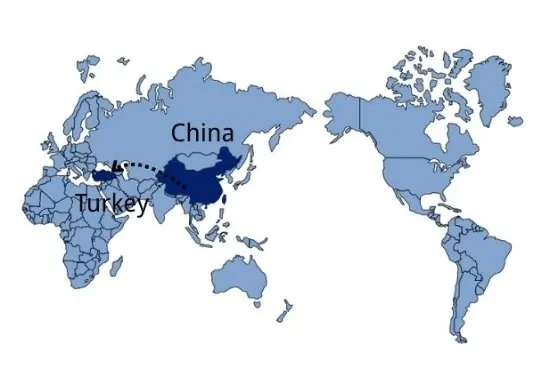
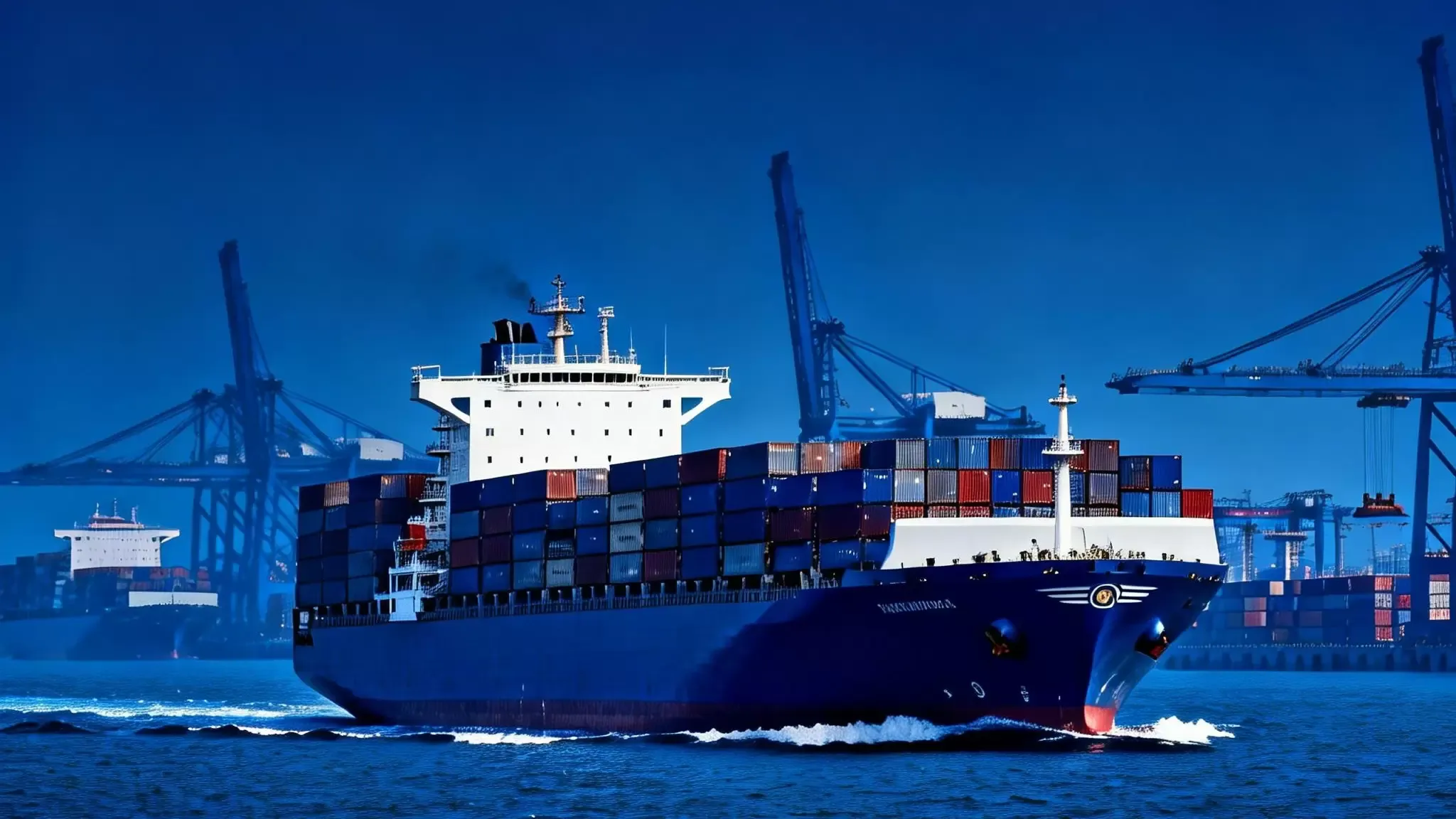
Shipping from China to Turkey is not a single route but four different supply chains, and choosing the wrong one is the most common reason importers overpay or run out of stock. Sea freight through the Suez Canal reaches Ambarlı, Mersin or İzmir in roughly three to five weeks. Air freight lands at Istanbul Airport in days. Block trains on the Middle Corridor cross Kazakhstan, the Caspian and Georgia before entering eastern Turkey. TIR trucks drive the same corridor by road. Each option has its own cost floor, transit window and failure mode, and the right choice depends on what you import, where your buyer sits in Türkiye, and how much inventory you can afford to hold.
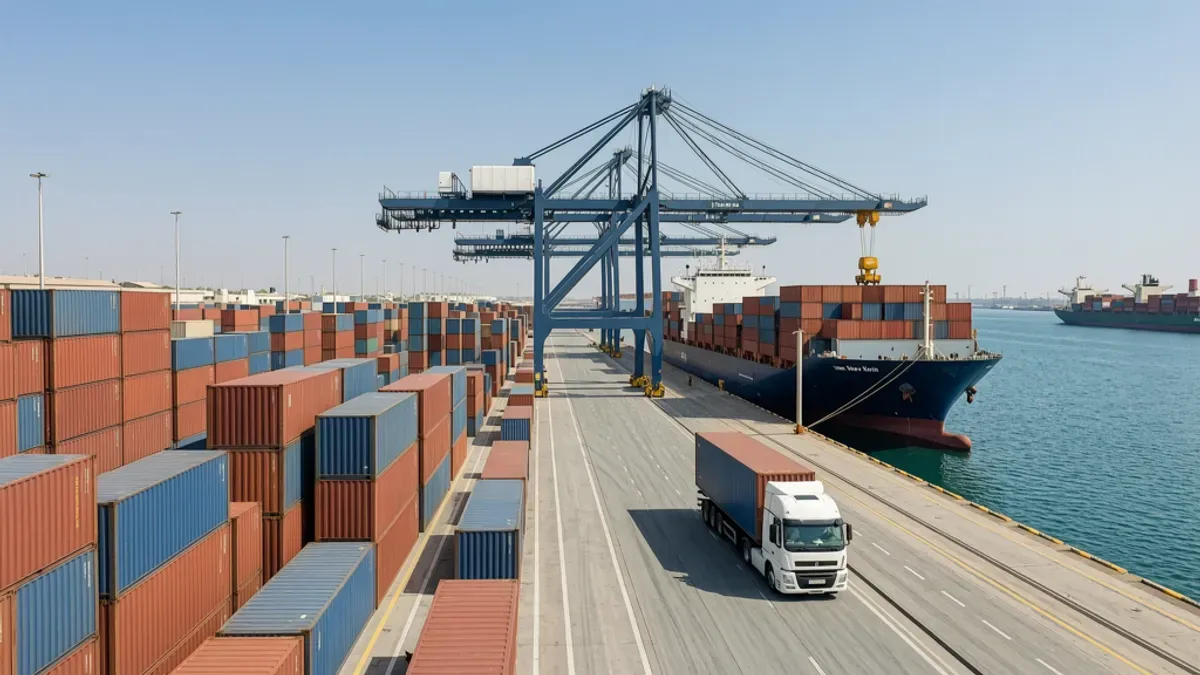
This guide is written from the operating side of the lane: how freight from China to Turkey is priced, which port and airport pairs actually work, how the Middle Corridor compares with ocean freight, what Turkish customs and VAT will cost you, which documents clear a shipment, and where importers most often lose money. Türkiye — still searched and invoiced as “Turkey” in most trade documents — imported close to USD 45 billion of goods from China in 2024 alone — more than from any other country, and the mix has shifted toward machinery, solar equipment, vehicle parts and e-commerce parcels, which changes how shipments should be consolidated.
Sea Freight From China to Turkey
Sea freight from China to Turkey is the cheapest way to move anything above roughly 15 CBM or 2 tonnes, and it is the default for furniture, machinery, building materials, textiles and full production runs. Container services run from Shanghai, Ningbo, Shenzhen, Qingdao and Xiamen into the Marmara region, the Aegean and the Mediterranean coast, with a mix of direct calls and transshipment through Piraeus, Port Said or Malta.
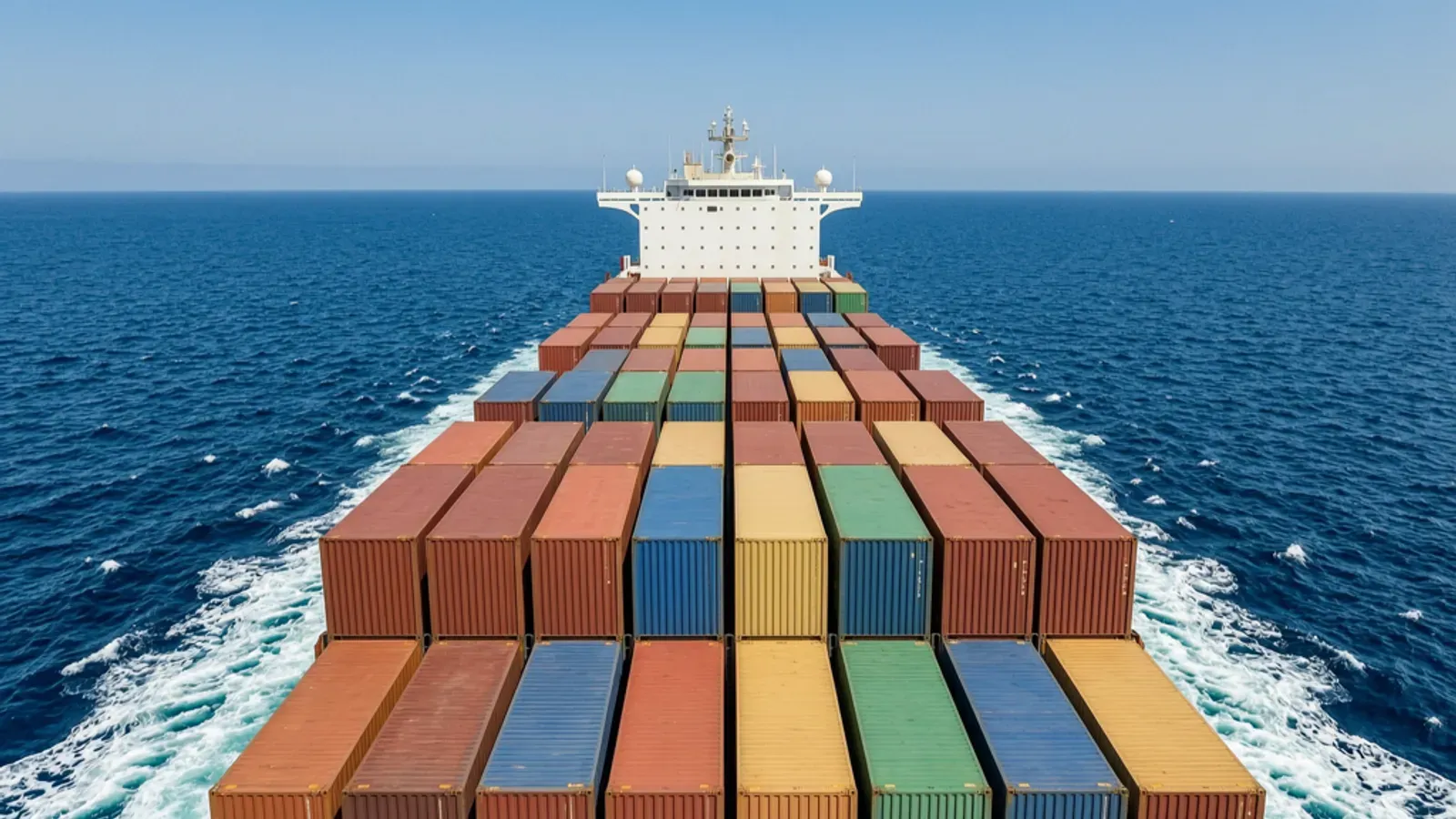
The strategic detail most rate quotes hide is that Turkey sits off the main Asia–Europe trunk lane. Large vessels do not always call Ambarlı directly; a good share of Turkish cargo is discharged at Piraeus or Port Said and fed onward by a smaller vessel. That relay is cheap but it adds five to eight days and one more handling point, so a slightly higher direct rate is often the better commercial choice for time-sensitive importers.
When to Choose Sea Freight
- Your shipment exceeds 15 CBM or 2 tonnes and cost per unit matters more than speed
- Transit time of four to six weeks fits your inventory plan
- You need a full container, a shared LCL slot, or RoRo capacity for vehicles and machinery
- The goods are non-perishable and tolerant of humidity and handling
Typical cargo on this lane: furniture and home goods, industrial machinery and spare parts, building materials and ceramics, textiles and apparel accessories, automotive parts, solar panels and batteries (subject to carrier DG rules), and project cargo.
Sea Freight vs Air Freight from China to Turkey
| Factor | Sea Freight | Air Freight |
|---|
| Cost per kg | Lowest | Highest |
|---|
| Transit time | 20–38 days | 3–7 days |
|---|
| Minimum sensible load | 15 CBM or 2 tonnes | 50–100 kg |
|---|
| Cargo restrictions | Broadest | Battery, liquid and DG limits |
|---|
| Best for | Volume and heavy goods | Urgent and high-value goods |
|---|
Key Ports and Routes
China origin ports: Shanghai, Ningbo, Shenzhen (Yantian and Shekou), Guangzhou/Nansha, Qingdao, Tianjin and Xiamen.
Turkish destination ports: Ambarlı (Istanbul’s main container complex, including Marport, Kumport and Evyap), Mersin International Port, İzmir and Aliağa, Gemlik (Bursa), Tekirdağ (Asyaport), Kocaeli (Yılport), İskenderun and Samsun.
Indicative sea freight transit times, China to Turkey
| Origin port | Turkish port | Transit time |
|---|
| Shanghai | Ambarlı | 28–34 days |
|---|
| Ningbo | Ambarlı | 27–32 days |
|---|
| Shenzhen | Ambarlı | 25–30 days |
|---|
| Qingdao | Mersin | 30–35 days |
|---|
| Shanghai | Mersin | 25–30 days |
|---|
| Ningbo | İzmir / Aliağa | 26–32 days |
|---|
Add 5–8 days when the routing transships at Piraeus or Port Said, and add 10–14 days if your carrier is still diverting around the Cape of Good Hope instead of transiting the Red Sea.
FCL, LCL and RoRo
FCL (full container load). A 20ft, 40ft or 40HQ container used exclusively for your cargo. Lowest cost per CBM above roughly 15 CBM, fastest handling and the least damage risk. Standard choice for machinery, furniture sets and repeat production orders into Istanbul, Bursa and Kocaeli.
LCL (less than container load). Your cargo shares a container with other shippers and is deconsolidated at an Ambarlı or Mersin warehouse. Sensible below 15 CBM, but expect a longer door-to-door window and per-shipment destination charges (CFS, documentation, delivery order) that can surprise first-time importers.
RoRo (roll-on/roll-off). For cars, vans, trucks, buses and self-propelled or wheeled machinery. No container, no packing, and usually the cheapest way to move a single vehicle from China to Turkey.
Air Freight From China to Turkey
Air freight from China to Turkey is the fastest option and the only sensible one when a shipment is urgent, high-value or small. Istanbul Airport has ranked among Europe’s busiest cargo hubs in recent years, with a dedicated cargo terminal and direct freighter capacity from Shanghai, Guangzhou, Shenzhen and Beijing, while Sabiha Gökçen absorbs a large share of belly and express traffic into the Anatolian side.
Air is the right mode when stockout cost exceeds freight cost. Electronics, fashion drops, exhibition materials, spare parts for a stopped production line and sample orders all belong here. It is rarely the right mode for furniture, ceramics or anything above roughly 500 kg that can wait three weeks.
When to Choose Air Freight
- The goods are needed for a launch, a trade fair or a seasonal window
- Value density is high enough to absorb USD 4.5–8 per kg
- A production line is down and spare parts must arrive this week
- You are testing a new SKU before committing to a sea container
Typical air cargo: consumer electronics and accessories, apparel and footwear samples, cosmetics, medical devices and consumables, machinery spare parts, and e-commerce replenishment.
Air Freight vs Sea Freight: a decision guide
| Factor | Air Freight | Sea Freight |
|---|
| Transit time | 3–7 days | 20–38 days |
|---|
| Cost per kg | Higher | Lower |
|---|
| Volume ceiling | ~2 tonnes per shipment | Container scale |
|---|
| Schedule reliability | Very high | Weather and congestion dependent |
|---|
| Best for | Speed and stockouts | Cost and volume |
|---|
Key Airports and Routes
Chinese airports: Shanghai Pudong (PVG), Guangzhou Baiyun (CAN), Shenzhen Bao’an (SZX), Beijing Capital and Daxing (PEK/PKX), Chengdu Tianfu (TFU) and Zhengzhou (CGO).
Turkish airports: Istanbul Airport (IST), Sabiha Gökçen (SAW), İzmir Adnan Menderes (ADB), Ankara Esenboğa (ESB) and Adana (ADA).
Indicative air freight transit times, China to Turkey
| Route | Transit time |
|---|
| Shanghai → Istanbul | 2–4 days |
|---|
| Guangzhou → Istanbul | 3–5 days |
|---|
| Shenzhen → Istanbul | 3–6 days |
|---|
| Beijing → Istanbul | 2–5 days |
|---|
| Shanghai → Izmir (via IST) | 4–7 days |
|---|
Transit is measured door to door. Customs clearance at IST cargo terminals is normally completed within one working day when the declaration and the importer’s registration are in order; it is the documents, not the flights, that usually cause the delay.
Rail Freight From China to Turkey: The Middle Corridor
Rail freight from China to Turkey runs on the Middle Corridor: block trains leave Xi’an, Zhengzhou, Chongqing and Yiwu, cross into Kazakhstan at Khorgos or Alashankou, run to the Caspian port of Aktau or Alat, cross by ferry to Baku, continue by rail through Georgia to Kars on the Baku–Tbilisi–Kars line, and enter the Turkish network toward Istanbul and Halkalı. Typical door-to-door time is 18–26 days — slower than air, faster than sea, and unaffected by Red Sea diversions.
Rail is the interesting option for mid-value, mid-urgency cargo: solar modules, machinery, auto parts, chemicals in approved packaging and consumer goods where a five-week ocean transit is too slow but air freight would erase the margin. It is not a substitute for sea freight on cost, and not a substitute for air on speed.
Indicative rail freight transit times, China to Istanbul
| Route | Transit time |
|---|
| Xi’an → Istanbul via BTK | 18–22 days |
|---|
| Zhengzhou → Istanbul via BTK | 20–24 days |
|---|
| Chongqing → Istanbul via BTK | 19–24 days |
|---|
| Yiwu → Istanbul via BTK | 22–26 days |
|---|
Capacity is the constraint, not demand. Caspian ferry slots and BTK line paths are limited, and a missed ferry connection costs a week. Book rail two to three weeks ahead during Q3 and Q4, and treat any schedule that promises under 18 days as optimistic.
Sea vs rail vs air from China to Turkey
| Mode | Transit time | Relative cost | Best for |
|---|
| Sea freight | 20–38 days | Lowest | Heavy, bulky, non-urgent cargo |
|---|
| Rail (Middle Corridor) | 18–26 days | Medium | Mid-value cargo with a deadline |
|---|
| Air freight | 3–7 days | Highest | Urgent, high-value, small cargo |
|---|
Door to Door Shipping From China to Turkey
Door-to-door shipping from China to Turkey puts the whole chain under one contract: supplier pickup, export declaration in China, main carriage, Turkish import clearance, duty and VAT settlement, and final delivery to your warehouse, factory or project site. For importers without a customs department, it is usually the difference between a shipment that arrives and one that sits at Ambarlı accruing storage.
What is included in a properly quoted door-to-door service:
- Pickup from the supplier, with a check of packing marks and carton counts
- Export clearance and, where applicable, certificate of origin
- Sea, air, rail or road main carriage
- Turkish import declaration filed by a licensed broker (gümrük müşaviri)
- Duty, additional duty and VAT settlement
- Delivery to the final address, with unloading arranged in advance
Door-to-door process, China to Turkey
| Step | What happens | Owner |
|---|
| Booking | Space, mode and Incoterm confirmed | Efanda |
|---|
| Pickup | Cargo collected and checked at origin | Efanda origin team |
|---|
| Export | Declaration and documents filed in China | Efanda |
|---|
| Main carriage | Sea, air, rail or TIR | Carrier |
|---|
| Import clearance | Beyanname filed, duty and VAT paid | Turkish broker |
|---|
| Delivery | Trucked to the final address | Efanda partner |
|---|
One Turkish detail decides the whole design of a DDP shipment: the importer of record must be registered in Turkey with a tax number (VKN). A foreign seller cannot simply declare its own goods and pay the duty. DDP therefore runs through a registered importer-of-record arrangement — either your Turkish entity, your buyer, or a partner of record that we coordinate — and the duty, VAT and any additional duty are itemized before the cargo sails rather than discovered at the terminal.
Shipping Costs From China to Turkey
Shipping costs from China to Turkey are built from four blocks: origin charges (pickup, export declaration, CFS handling), main freight, destination charges (terminal handling, documentation, delivery order, storage) and duty/VAT. Most importer complaints trace back to comparing only the middle block and being surprised by the other three.
Main freight moves with the market. Rates on the Suez lane react to Red Sea routing, peak season surcharges and carrier capacity changes within weeks, so treat the ranges below as planning benchmarks, not quotes.
Indicative sea freight cost ranges, China to Turkey, November 2026
| Service | Indicative range | Best for |
|---|
| 20ft FCL | USD 1,400 – 2,800 | 10–28 CBM of dense cargo |
|---|
| 40ft / 40HQ FCL | USD 2,300 – 4,200 | 25–65 CBM, furniture and machinery |
|---|
| LCL | USD 95 – 160 per CBM | 2–15 CBM, test orders |
|---|
| RoRo | Quoted per vehicle | Cars, vans, wheeled machinery |
|---|
Indicative air freight cost ranges, China to Turkey, November 2026
| Shipment size | Indicative range | Typical use |
|---|
| 50–100 kg | USD 6 – 8 per kg | Samples, documents, spare parts |
|---|
| 100–300 kg | USD 5 – 7 per kg | Electronics, apparel restock |
|---|
| 500 kg and above | USD 4.5 – 6 per kg | Commercial cargo, negotiated |
|---|
Rail on the Middle Corridor usually prices between sea and air — roughly USD 3,500 – 6,500 for a 40HQ to Istanbul, depending on the season and the Caspian ferry component. All figures above are indicative ranges as of November 2026 and exclude duty, VAT and cargo insurance; they move weekly with fuel, peak season and capacity.
Shipping Time From China to Turkey
Shipping time from China to Turkey is a range, and the honest version of the number matters more than the optimistic one. Port-to-port ocean transit is 20–38 days; door-to-door adds pickup, export clearance, import clearance and inland trucking, so plan five to seven weeks end to end for sea and one week for air.
Sea freight transit time by port pair
| China port | Turkish port | Transit time |
|---|
| Shanghai | Ambarlı | 28–34 days |
|---|
| Ningbo | Mersin | 25–30 days |
|---|
| Shenzhen | İzmir / Aliağa | 26–32 days |
|---|
| Qingdao | Gemlik | 30–35 days |
|---|
Air freight transit time by route
| Route | Transit time |
|---|
| Shanghai → Istanbul | 2–4 days |
|---|
| Guangzhou → Istanbul | 3–5 days |
|---|
| Shenzhen → Sabiha Gökçen | 3–6 days |
|---|
What actually delays shipments on this lane:
- Red Sea routing. Carriers diverting around the Cape of Good Hope add 10–14 days to Asia–Europe services, and Turkish cargo transshipped in Europe inherits that delay.
- Transshipment at Piraeus or Port Said. Cheap, but the second vessel is where cargo waits.
- Ambarlı congestion. The Istanbul container complex runs hot in Q4; berth and yard congestion can add three to seven days.
- Customs inspection. A red-channel inspection adds two to five days on top of clearance, and reference-price disputes at Mersin and Ambarlı are common on under-invoiced cargo.
- Missing documents. No CE marking, no conformity certificate, no importer registration means no clearance, regardless of the mode.
Customs Clearance and Documents Required in Turkey
Customs clearance is where a well-priced shipment becomes an expensive one. Turkey has been in a customs union with the EU since 1996, so its tariff structure follows the EU Common Customs Tariff, but import VAT, additional duties and product regulation are national and change more often than importers expect.
The core numbers to plan for:
- Import VAT (KDV): 20 percent on most goods, with reduced rates for certain categories
- Customs duty: aligned with the EU tariff, typically 0–12 percent depending on HS code
- Additional customs duty (ilave gümrük vergisi): applied to specific product groups, including several Chinese-origin categories such as certain vehicles, electronics and textile items
- KKDF: a resource utilization support fund charge of 6 percent that applies to certain imports settled on deferred payment terms
The importer of record must be registered in Turkey with a tax number (VKN) and must file through a licensed customs broker. Declarations go through Turkey’s single-window system, and the customs receipt (vergi tahakkuk) is issued electronically — ask for it, because it is the only document that proves what duty and VAT were actually paid.
Standard documents for importing into Turkey
| Document | Purpose | Notes |
|---|
| Commercial invoice | Declares value and terms | Must match HS code and Incoterm |
|---|
| Packing list | Quantity, weight, packaging | Drives inspection and CFS charges |
|---|
| Bill of lading / AWB | Contract of carriage | Original, telex release or sea waybill |
|---|
| Certificate of origin | Confirms Chinese origin | Needed for duty and anti-dumping checks |
|---|
| CE marking / conformity | Product safety compliance | Required for regulated categories |
|---|
| Importer tax record (VKN) | Identifies the importer of record | Mandatory before declaration |
|---|
| Insurance certificate | Cargo cover evidence | Recommended on every shipment |
|---|
Regulated categories carry extra work: electronics and machinery need CE conformity documentation, toys and textiles need chemical and labelling checks, food and cosmetics need Ministry of Agriculture or Ministry of Health approval, and second-hand goods generally require an import permit from the Ministry of Trade. Confirm the regime before you book, not after the container is loaded.
Common Mistakes When Shipping From China to Turkey
Most losses on the China–Turkey lane are avoidable, and they repeat in the same patterns across importers of every size.
Frequent mistakes and their impact
| Mistake | What it causes | Typical cost |
|---|
| Choosing the cheapest quote only | Hidden destination and CFS charges | Extra 15–30 percent on the invoice |
|---|
| Wrong HS code | Wrong duty, delays, penalties | Reclassification after arrival |
|---|
| Ignoring additional duty | Margin erosion | Unexpected duty on arrival |
|---|
| No Turkish importer of record | Cargo cannot be cleared | Storage and demurrage from day 4 |
|---|
| Assuming Incoterms cover clearance | Duty falls to the wrong party | Disputes with supplier or buyer |
|---|
| Skipping cargo insurance | Unrecoverable damage | Full cargo value at risk |
|---|
Three habits prevent almost all of it. First, ask for an all-in door-to-door quote broken into origin, freight, destination and duty, rather than a headline rate. Second, verify the HS code and whether an additional duty applies to that code before the goods ship. Third, make sure the importer registration and product conformity documents exist weeks before arrival — not when the vessel is at anchor.
How to Choose the Right Freight Forwarder
A freight forwarder from China to Turkey should be judged on destination capability, not only on the rate. The failures that hurt importers happen at Ambarlı, Mersin and IST, in the broker’s office and at the inspection ramp, which is exactly where a cheap online booking platform has no people.
What to check:
- Turkish customs capability. A licensed broker relationship, not a referral, and a named contact who can answer a classification question.
- Mode neutrality. A forwarder who sells only sea will never tell you that rail would have been better for your deadline.
- Clear Incoterms and DDP mechanics. Ask explicitly who is the importer of record and how duty and VAT are settled.
- Document discipline. Pre-shipment checks on the invoice, packing list, HS code and conformity paperwork.
- Communication during exceptions. The test of a forwarder is what happens when a vessel is rolled or an inspection is ordered.
Why Work With EFANDA Logistics
EFANDA Logistics has handled China-origin freight since 2018 from Shenzhen, and the China–Turkey lane is one of our standing trade routes. We quote sea, air, rail and road on the same desk, so the recommendation you get is the one that fits your deadline and your margin rather than the one we happen to sell.
EFANDA Logistics on the China to Turkey lane
| Service area | What you get |
|---|
| Sea freight China → Turkey | FCL, LCL and RoRo to Ambarlı, Mersin, İzmir and Gemlik |
|---|
| Air freight China → Turkey | Consolidation and direct uplift into IST and SAW |
|---|
| Rail via Middle Corridor | Block-train booking with realistic transit windows |
|---|
| Turkish customs | Broker coordination, duty and VAT planning |
|---|
| Door-to-door DDP | Importer-of-record arrangement and final delivery |
|---|
| Account management | One advisor, proactive milestone updates |
|---|
If you are comparing routes, ask us for a side-by-side: the same shipment priced by sea, rail and air with realistic transit windows and the landed cost including duty and VAT. That comparison, not a single rate, is what usually decides the right mode — and it is free.