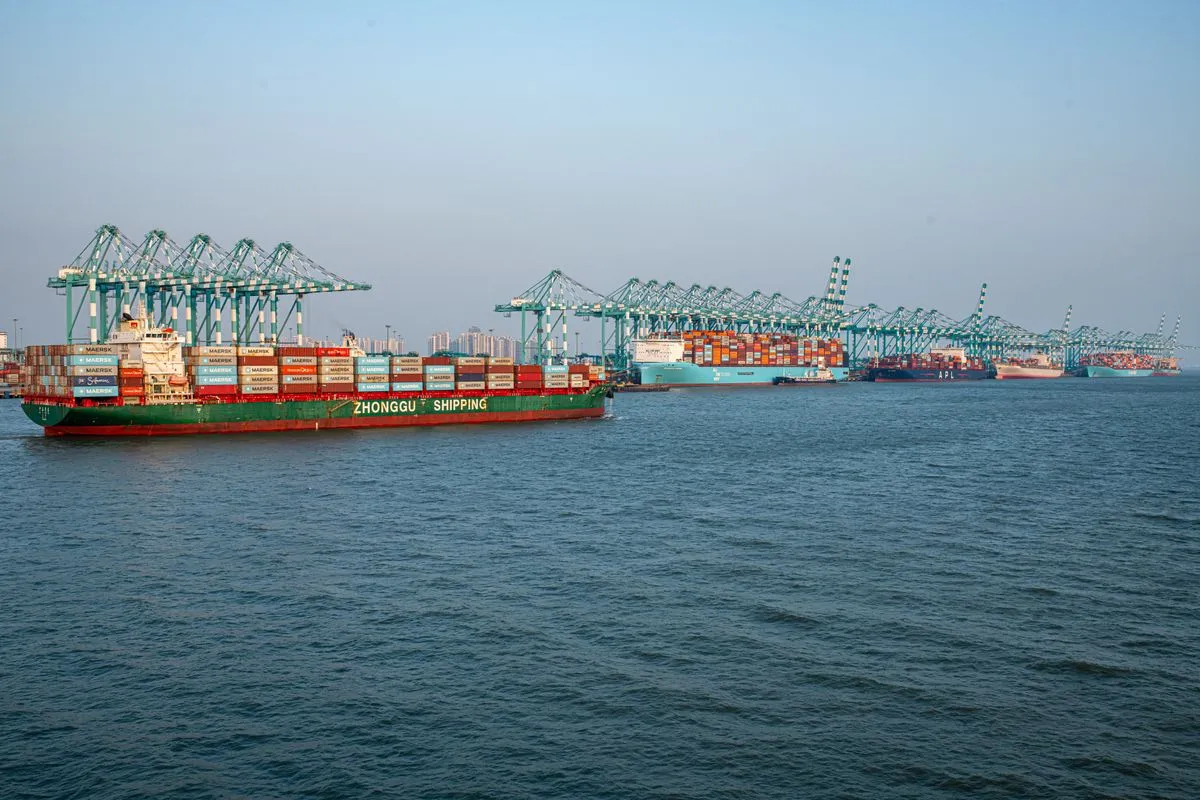
Planning next year’s Gulf inventory and wondering why every forwarder keeps asking about your February delivery dates already? Ramadan 2027 shipping to the Middle East has a problem no normal year has: the holy month is expected to run from February 8 to March 8, 2027 — starting just two days after Chinese New Year on February 6. The Gulf’s biggest retail season and China’s longest production shutdown land on the same weeks, and the booking decisions that decide whether your cargo makes it are all due in December and January.
This guide gives you the exact 2027 dates, the working-hours reality at Gulf ports during Ramadan, a week-by-week booking calendar for sea and air freight, and the rate impact to budget for — all built from how we move China–Middle East cargo through this window every year.
When Is Ramadan 2027? The Dates That Matter for Cargo
Ramadan 2027 is expected to begin on the evening of Sunday, February 7, with the first day of fasting on Monday, February 8, and to end on Monday, March 8 — with Eid al-Fitr following around Tuesday, March 9. These dates follow the Umm al-Qura calendar; the official start and end depend on the crescent moon sighting and can shift by a day in either direction, sometimes differently between countries.
| Milestone | Expected Date (2027) | What It Means for Your Cargo |
|---|---|---|
| First day of Ramadan | Monday, February 8 | Customs, ports and banks switch to reduced hours across the Gulf |
| Laylat al-Qadr (27th night) | Evening of Friday, March 5 | Busiest retail and delivery days of the month around it |
| Last day of Ramadan | Monday, March 8 | Clearance slows to a crawl as offices wind down for Eid |
| Eid al-Fitr | Tuesday, March 9 (subject to moon sighting) | Most Gulf businesses close for 3–5 days; ports run skeleton crews |
| Eid holidays end | ~Sunday, March 14 | Full operations resume; the post-Eid clearance backlog begins |
The commercial peak runs the other way than most Western importers expect: demand spikes before and during Ramadan, not after. Families stock up on food in the two weeks before the month starts, evening shopping surges through the month itself, and Eid gifting drives a second wave in the final ten days. Your shelf deadline is February 8, not March 9.
Why Is Ramadan 2027 a Double Squeeze for China–Middle East Cargo?
Because Ramadan starts on February 8 — two days after Chinese New Year falls on Saturday, February 6 — the entire holy month sits inside China’s factory shutdown window, and the two calendars squeeze your supply chain from both ends at once. We break down the China side in detail in our Chinese New Year 2027 shipping guide; the short version is what it does to your Ramadan plan:
- Production ends mid-January. Most Chinese factories wind down from around January 15 and do not return to full output until early March. Anything not finished and gated in by mid-January is a March shipment, not a Ramadan shipment.
- The last dependable ocean sailings leave China between January 15 and 25. Those vessels reach Jebel Ali in mid-to-late February — deep inside Ramadan, clearing at Ramadan speed.
- The demand side does not wait. Gulf retailers want stock on shelves before February 8, which means arriving by late January — which means sailing in the first half of January, exactly when your supplier is trying to close for the holiday.

In plain terms: cargo that would comfortably ship in the first week of February in a normal year has no production window in 2027, and cargo produced in late January has no comfortable arrival window. Every week of slack you would normally have is gone — so the plan below replaces it with fixed deadlines.
How Do Gulf Ports and Customs Work During Ramadan?
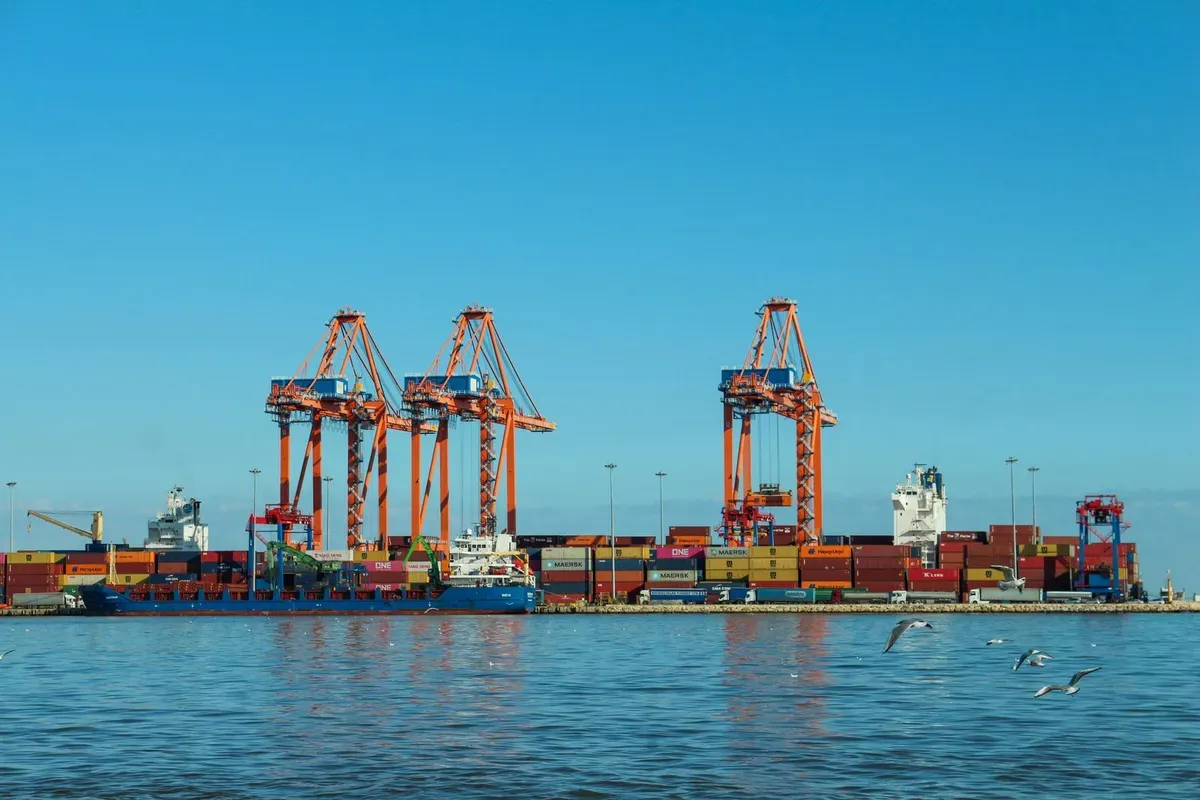
They do not close — ports across the Gulf keep operating around the clock during Ramadan, but on reduced staffing and shorter office hours, so a clearance that takes one day in October routinely takes three to five days in February. The operational pattern repeats across the region every year:
| Market | Government & Customs Hours | Port Operations | Watch Out For |
|---|---|---|---|
| UAE | 6-hour workday for government and administrative staff | Ports run 24/7, with a roughly 2.5-hour evening break (~17:30–20:00) for iftar | Jebel Ali free time is typically 5–7 days; slower inspections eat it fast |
| Saudi Arabia | Government offices open ~6 hours a day with significantly reduced staffing | Ports operational; stevedore and gate work slows after sunset | SABER certification and document approvals can stall until after Eid |
| Qatar | Reduced government hours | Port of Hamad gate passes alone can take 1–2 hours with Ramadan staffing | Vessel loading takes longer; truck queues build in the late afternoon |
| Oman | Government offices on a ~6-hour schedule | Ports observe a ~2-hour evening break (~18:00–20:00) | Customs processes stretch; plan extra days at Sohar and Salalah |
| Kuwait | Reduced government and banking hours | Ports operational with slower gates | Approval chains lengthen; consignee availability drops after iftar |
Two details catch importers every year. First, the slowdown is not just at the destination — transit hubs in the region (and feeders connecting through them) run on the same shortened hours, so a transshipment routing adds a second layer of Ramadan risk your direct service does not have. Second, demurrage clocks do not observe the holiday: once free time expires, Gulf ports charge roughly $75 – $200 per day per container, and at Jebel Ali those penalties can run $100 – $150 per day. A container that arrives on February 6 with imperfect paperwork can burn its free time before a single inspector looks at it. For current cost baselines on the region’s busiest lane, see our breakdown of exact shipping container rates from China to the UAE.
What Is the Ramadan 2027 Shipping Calendar, Working Backwards?
Count back from the date your buyer needs stock on the shelf — for most Ramadan programs that is the first week of February — and every mode gets a hard deadline that falls in December or early January. Sea freight from China to the main Gulf ports takes 14–26 days port-to-port depending on the origin (Shenzhen–Jebel Ali direct runs about 14–18 days; Qingdao runs 22–26), and air freight takes 3–8 days; our guide on how long shipping from China to the UAE takes breaks down the lane-by-lane numbers. Add Ramadan-speed clearance on top, and the calendar builds itself:
| Mode | Book Space By | Cargo Ready in China | Latest Departure | Arrives Gulf | Risk Profile |
|---|---|---|---|---|---|
| Ocean FCL — pre-Ramadan shelf stock | December 15 | December 20 – January 5 | January 5 – 12 | Late January | Clears customs before Feb 8; the safe lane |
| Ocean FCL — mid-Ramadan arrival | Early January | By January 15 | January 15 – 25 (last CNY sailings) | Mid-to-late February | +3–5 days clearance at Ramadan speed |
| Ocean LCL | Early December | In the CFS by late December | Early January consolidation | February | CFS cut-offs run ~7–10 days before FCL |
| Air freight — top-up and late stock | 10–14 days before flight | Through late January | By ~January 25 for pre-Ramadan delivery | 3–8 days after departure | Rates spike hard in the last two weeks of January |
Read the table from the top and one row at a time stops being available: miss December 15 and the pre-Ramadan FCL window is gone; miss mid-January production and the mid-Ramadan window is gone; from late January onwards, air freight is your only tool — at peak pricing. If you are shipping into Saudi Arabia rather than the UAE, the same deadlines apply with longer clearance padding; our sea shipping from China to Saudi Arabia guide covers the SABER documentation that has to be finished before the vessel arrives, not after.
How Much More Does Ramadan-Period Shipping Cost?
Budget 25–35% on top of normal ocean rates for the peak weeks before Ramadan, and up to roughly double the normal per-kg rate on last-minute air freight — the surcharge mechanics are identical to any peak season, just concentrated into fewer weeks. Using current 2026 baselines on the China–Jebel Ali lane (a 20ft container normally runs $1,200 – $1,800 and a 40ft $1,800 – $2,800), the pre-Ramadan peak pushes those bands into roughly $1,500 – $2,400 and $2,300 – $3,800 once Peak Season Surcharge and space scarcity stack on:

Air freight behaves worse because capacity genuinely disappears: standard China–Saudi Arabia air rates sit around $3.50 – $6.00 per kg for shipments over 100 kg, and in the final two weeks of January — when ocean has stopped being an option and every late importer turns to air at once — expect quotes toward $5.00 – $8.00 per kg on the tightest days, if space exists at all. Our air freight from China to Saudi Arabia guide covers the surcharge stack (FSC, security, AWB) that sits underneath those numbers.
Three honesty notes on these figures. First, all rates above are indicative bands as of November 2026 — Gulf-bound pricing is volatile, fuel surcharges move monthly, and the actual 2027 peak levels will only be knowable a few weeks out. Second, the expensive container is not the one you paid a PSS on; it is the one that misses the window entirely and either flies at $8.00 per kg or arrives for Eid instead of Ramadan. Third, booking early is the only lever that reliably beats the surcharge — carriers release their best Ramadan-window rates to the bookings that commit first.
Which Freight Mode Should You Choose for Ramadan 2027?
For most importers the answer is a split: ocean FCL carries the bulk of the program on the early-January sailings, and a small air allocation stays behind as insurance for whatever production misses the gate. Here is how each mode earns its place.
Ocean FCL — the backbone
Book your containers by mid-December and prefer direct services over transshipment routings: a direct Shenzhen–Jebel Ali sailing removes the regional-hub connection that Ramadan working hours put at risk, and it typically saves 3–5 days of feeder waiting even in a normal week. Confirm free time terms at destination before you book, and if your program is Saudi-bound, start SABER certification the day the PO is signed.
Ocean LCL — only if you move early
LCL works for Ramadan top-ups under ~12 CBM, but the consolidation cut-off at the Chinese CFS runs about a week ahead of the FCL gate-in deadline, and deconsolidation at the destination suffers the same Ramadan slowdown as customs. Get cargo into the warehouse by late December or choose air instead — our FCL vs LCL shipping comparison walks through the break-even math.
Air freight — the buffer, not the plan
Hold an air allocation of 10–20% of your Ramadan volume for the SKUs that cannot stock out: fast-moving food items, gifting lines, and anything whose production is confirmed late. Book it 10–14 days ahead and treat late January as the practical ceiling — after that you are paying peak rates for post-Ramadan arrival anyway. For UAE-bound programs, our air shipping from China to UAE guide covers Dubai and Abu Dhabi airport options.
Seven Moves to Protect Your Ramadan 2027 Supply Chain
The importers who come through Ramadan season cleanly all do the same handful of things in November and December. Work the list now, while the cheap options are still open:
- Lock ocean space by December 15. Pre-Ramadan FCL capacity sells out three to four weeks before departure; a booking made in the second half of December is already shopping the leftovers.
- Split the program 80/20. Move ~80% of volume by sea on the early-January sailings and hold ~20% as an air buffer for the SKUs that cannot miss February 8.
- Finish destination paperwork before the vessel sails. Importer codes, Mirsal 2 registration for the UAE, SABER for Saudi Arabia, certificates of origin — every document that needs a Gulf government counter moves at 6-hour-day speed from February 8 onward, so nothing should still be pending when the ship docks. Our customs clearance team pre-clears Ramadan cargo against arrival dates for exactly this reason.
- Pad every clearance estimate by 3–5 days — more for Saudi Arabia — and set your demurrage alerts against free-time expiry, not against the original ETA.
- Stage buffer stock in a warehouse. Holding two to four weeks of cover in a China consolidation warehouse (or a Dubai facility) converts a missed sailing from a stock-out into a rebooking. Our warehouse services in China exist for exactly this pattern.
- Confirm your consignee’s Ramadan operating hours in writing — receiving windows, Eid closure dates, and who answers the phone during iftar. A container that clears on time can still fail at a closed warehouse gate.
- Insure the peak-season leg. Congestion, extended dwell times and rushed post-Eid handling all raise damage and delay exposure; cargo insurance for China exports costs a fraction of one demurrage week.

FAQ
Does shipping to the Middle East stop during Ramadan?
No. Ports, airports and borders keep operating through the entire month, including 24/7 terminal operations at hubs like Jebel Ali. What changes is speed: government offices, customs desks and private businesses work roughly 6-hour days, so clearance, documentation and deliveries all take longer. Plan for flow, not stoppage.
When is the last safe date to ship sea freight for Ramadan 2027?
For stock that must be on shelves before Ramadan starts on February 8, treat January 5–12 as the last comfortable departures from China — and December 15 as the booking deadline behind them. Sailings between January 15 and 25 still arrive during February, but they clear customs at Ramadan speed and depend on your supplier surviving the Chinese New Year wind-down.
How much more should I budget for Ramadan-period freight?
As a planning rule, add 25–35% to normal ocean rates for the peak weeks — on current baselines that means roughly $1,500 – $2,400 for a 20ft and $2,300 – $3,800 for a 40ft to the Gulf — and expect last-minute air freight to run $5.00 – $8.00 per kg. All figures are indicative as of November 2026 and will move; reconfirm with your forwarder before committing.
What happens if my cargo arrives during Eid al-Fitr?
Eid al-Fitr (expected around March 9, 2027) closes most Gulf businesses for 3–5 days and leaves ports on skeleton crews. Cargo arriving that week typically sits until offices reopen — accumulating demurrage the whole time. Either land the container well before March 8, or deliberately schedule arrival for the week after Eid when the backlog has cleared.
Is air freight worth it for Ramadan stock?
Yes — as a buffer for the 10–20% of SKUs that cannot stock out, booked 10–14 days ahead and flown before late January. As a whole-program solution it only makes sense for high-margin, low-weight goods, because peak-season air rates can reach two to three times the per-kg cost of the same cargo shipped early by sea.
Does the Chinese New Year overlap really change my plan?
It is the single biggest factor for 2027. With Chinese New Year on February 6 and Ramadan starting February 8, there is no “ship it in early February” fallback — factories are closed and Gulf clearance is already slowing. Every deadline in this guide sits two to three weeks earlier than it would in a year when the two holidays are apart.
Conclusion
Ramadan 2027 shipping to the Middle East rewards the early and punishes the late more than any normal season: the month itself runs February 8 to March 8, the demand peak comes before it, and Chinese New Year erases the production window that would normally catch late orders. Book ocean space by December 15, finish destination paperwork before the vessel sails, pad your clearance math by 3–5 days, and keep a small air buffer for the SKUs that matter most.
Efanda Logistics has planned China–Middle East Ramadan programs from Shenzhen since 2018 — sea, air, customs pre-clearance and buffer warehousing under one roof, with every fee itemized before you commit. Contact us at +86 18929345880 to lock your Ramadan 2027 shipping plan while the early-window rates still apply.

Written by the EFANDA Logistics team — a Shenzhen-based freight forwarder established in 2018, moving cargo from China to ports worldwide with end-to-end pickup, consolidation, customs and door delivery.About us