How do you move four hundred kilowatts of photovoltaic modules and a rack of lithium storage from a factory in Jiangsu to a project site outside Tehran, in one season, without putting either on a ship through the Strait of Hormuz? You put them on a TIR trailer and drive. Shipping solar panels & energy storage from China to Iran by truck has become the default answer for Iranian developers in 2026 — not because the road is cheap, but because it is the only route that prices cargo per vehicle and delivers in weeks.
That shift creates three problems general cargo guides skip: modules are heavy enough that a full trailer sits within a tonne of its axle limit, storage is Class 9 dangerous goods with its own paperwork chain and carrier pool, and Iran’s tariff moves with how the importer is registered, not only the HS code.
1. Why Solar and Storage Cargo Is Moving Overland to Iran in 2026
Because Iran’s power deficit turned solar from a niche import category into a national procurement program at exactly the moment the sea lane stopped being plannable.
The gap is structural, not seasonal: Iran’s grid imbalance at the summer 2026 peak was estimated at roughly 13.6 gigawatts, with peak supply shortfalls of 15–20 percent. Against that, energy officials reported renewable additions accelerating from about 100 MW a year to roughly 100 MW a week, with around 1.7 GW of a planned 7 GW solar program operating and total renewable capacity near 4,162 MW by late October. Equipment already imported is enough for about 7,000 MW of solar, bought mostly from China, and authorities have issued permits for roughly 500 MW of battery capacity alongside it.
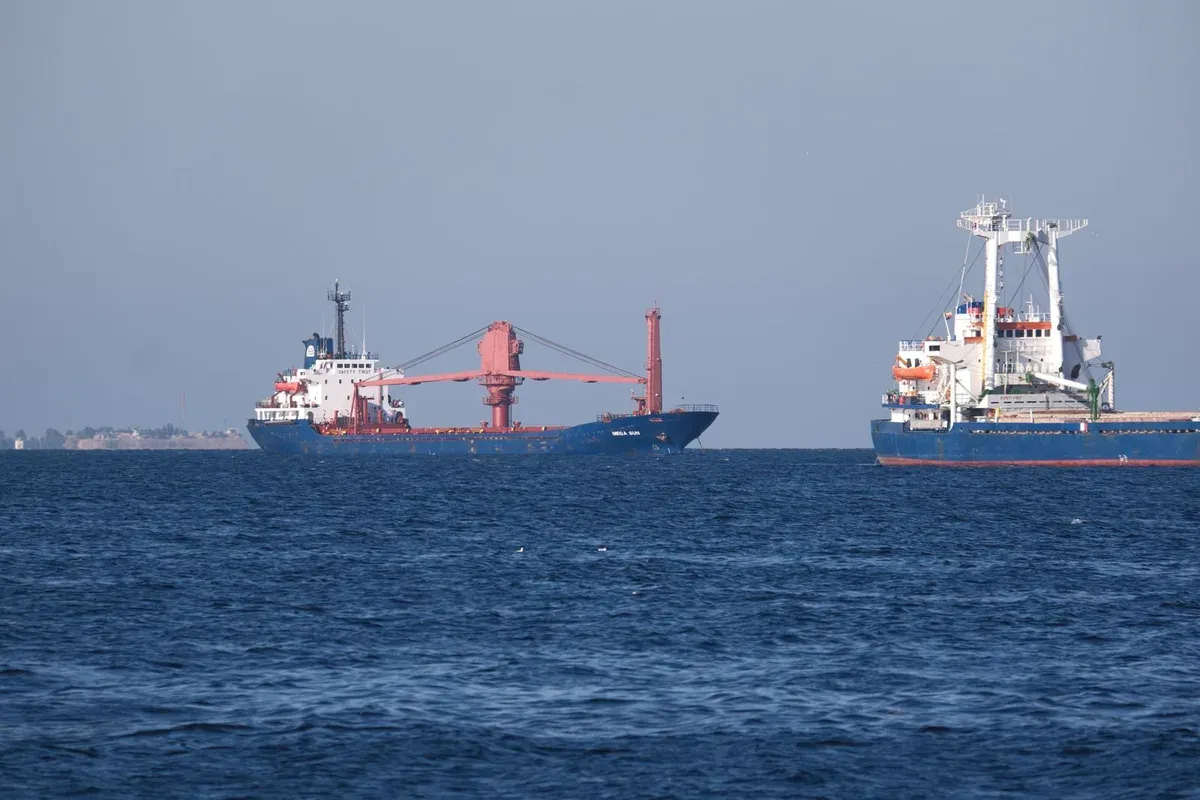
Now put that demand against the water. Since the 2026 Hormuz disruptions, carriers have layered war-risk surcharges onto Gulf transits and several have suspended direct Bandar Abbas calls, stretching ocean transits into the 30–50+ day range before inland haul. A module arriving in week nine has missed a construction window a trailer covers in five. It is the argument our China to Iran trucking guide makes for general cargo — solar feels it harder, because freight is a fraction of a project’s cost while the schedule is the project.
2. What One Trailer Actually Carries: Module Formats, Pallets and the 25-Tonne Ceiling
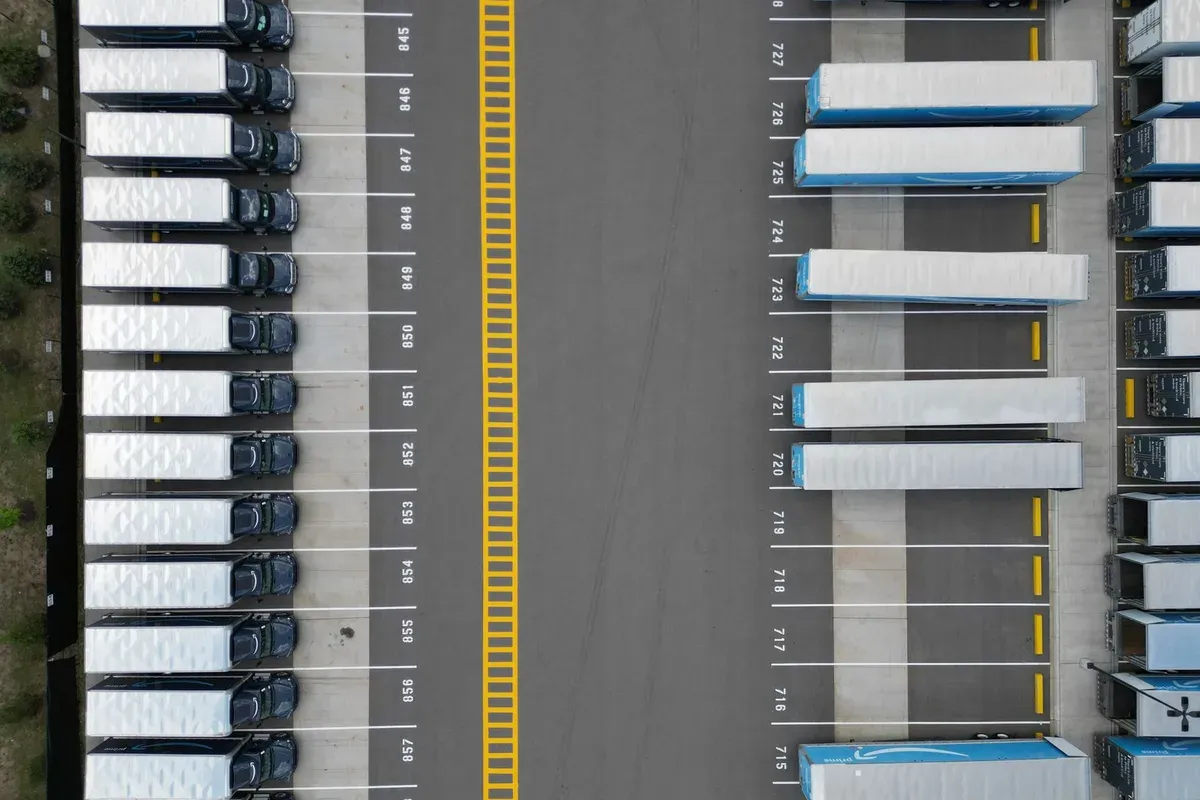
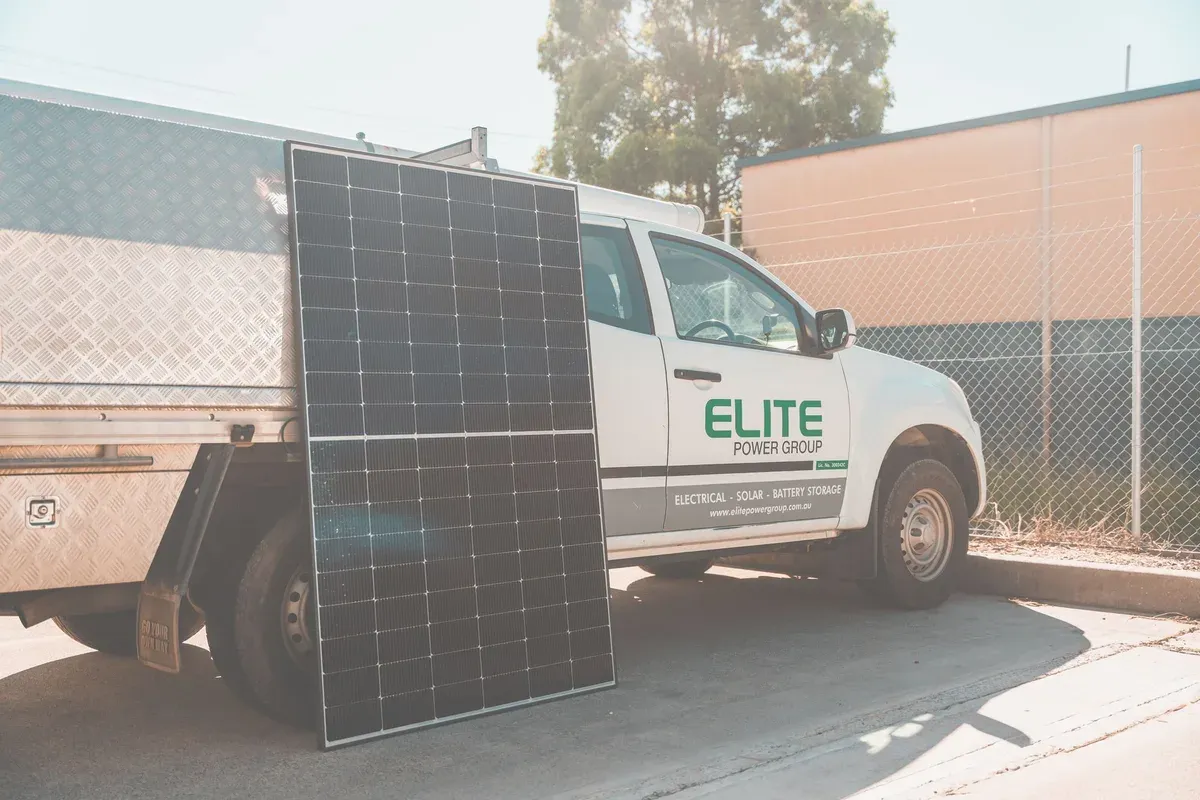
A standard 96 CBM trailer takes about 720 modules of 550 W — roughly 396 kWp — on the same 20-pallet pattern a 40HQ uses, and on glass-glass bifacial product that load lands within a tonne of the trailer’s 25-tonne payload limit.
Take a 550 W bifacial module at 2,278 × 1,134 × 30 mm and 32 kg, packed 36 to a pallet. Ten floor positions — two across, five rows deep on a 13.6-metre bed — stack two tiers: 20 pallets, 720 modules.
| Module | Weight each | 720 modules | kWp per trailer | Headroom to 25 T |
|---|---|---|---|---|
| 550 W monofacial, framed | 27.5 kg | 19.8 T | 396 kWp | 5.2 T |
| 550 W glass-glass bifacial | 32.0 kg | 23.0 T | 396 kWp | 2.0 T |
| 620 W double-glass bifacial | 34.0 kg | 24.5 T | 446 kWp | 0.5 T |
The last column is the constraint: at double-glass format the pallets, boards and wrap decide the final few hundred kilograms, so the trailer stops near 700 modules rather than 720 — one pallet of spares. Give the supplier the trailer’s payload figure, not the container’s.

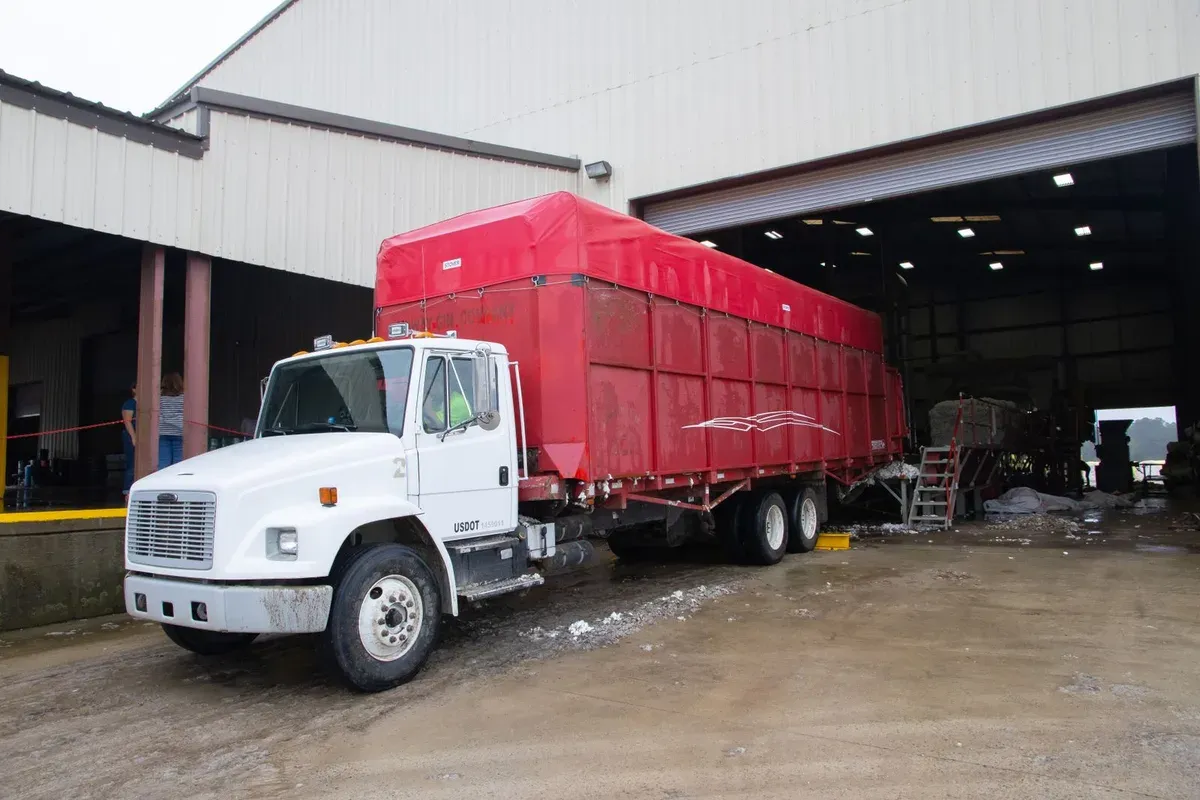
Two structural checks belong in the booking. A curtain-side trailer handles modules fine if the pallets are strapped to the bed; a box trailer is the only realistic option once batteries share the load. And check the door opening — a crew that cannot get a forklift through cleanly will improvise.
3. Lithium Batteries on the Same Trailer: The Class 9 Rules That Decide the Booking
Yes — batteries can ride the same corridor as the panels, but only if the carrier accepts Class 9 in writing before you book, the class is correct, and the paperwork reaches the forwarder at booking rather than at the border.
Lithium-ion cells and packs are Class 9 miscellaneous dangerous goods. The classification splits three ways, and the split decides the paperwork and how many carriers will quote you:
| UN number | What it covers | Typical Iran-bound cargo | Documentation |
|---|---|---|---|
| UN3480 | Lithium-ion cells and batteries shipped alone | Rack modules, spare packs, BESS cells | UN38.3 test summary, MSDS, DG declaration, Class 9 label, P903 packing |
| UN3481 | Batteries contained in or packed with equipment | Inverters with integrated storage, hybrid units | UN38.3, MSDS, lithium battery mark |
| UN3536 | Batteries installed in a cargo transport unit | Containerised BESS | UN38.3 plus the special-provision conditions for the unit |
The corridor is not ADR territory, and that cuts both ways. ADR governs road transport between European contracting states; China, Kyrgyzstan, Uzbekistan, Turkmenistan and Iran are not parties in that sense. What governs instead is the operator’s own DG acceptance policy layered over each transit state’s national rules. Specialist TIR operators on this corridor do carry ADR Class 9 with fire-retardant partitions; general consolidators frequently do not.
State of charge is carrier practice, not corridor law. The 30 percent SoC cap everyone quotes is an air rule for standalone lithium-ion cells; the road corridor has no single universal limit. In practice almost every operator accepting UN3480 here writes a 30 percent limit, a no-damaged-or-recalled declaration and a segregation requirement into the booking. Have the supplier discharge packs before pickup.
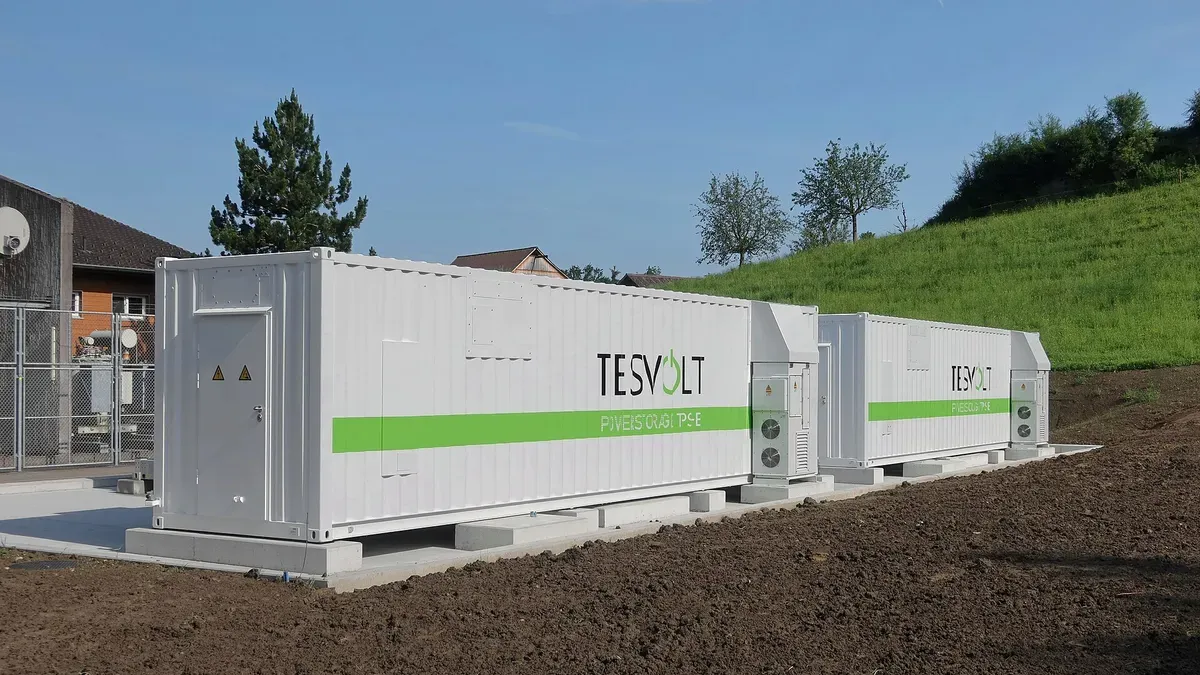
Mixing panels and batteries narrows the carrier pool. A combined load is legitimate and often the cheapest configuration, but it turns an ordinary booking into a mixed DG movement: expect an indicative USD 300–800 per trailer as of November 2026. For containerised BESS rather than rack modules, read our energy storage shipping guide first — the packaging class and carrier list differ.
4. Iran Import Rules for Solar Modules and Battery Storage
Iran’s tariff on solar modules is not a single rate: published figures run from about 5 percent to 30 percent, because the answer moves with the tariff line, the module type, and whether the importer clears under a renewable-energy permit. VAT of 10 percent then applies on the duty-paid value.
Classification comes first. Modules sit at HS 8541.43 in the current nomenclature, with the older 85414020 heading still appearing in Iranian customs practice and on supplier invoices. Inverters, controllers and structures each take their own line, and containerised storage is not a module tariff at all. Misclassification is the most common cause of reassessment at Tehran West Customs — and the trailer pays storage while it is argued.
On duty, a 2026 trade-practice band of roughly 10–20 percent is the figure to budget — with a tier near 30 percent where the domestic-content rule bites and a rate near 5 percent where the consignment clears against a registered renewable project. Confirm the line and rate with your broker before loading: the gap between 5 and 20 percent on a 396 kWp trailer is about USD 7,400.
The registration route matters as much as the rate. Plant-scale cargo needs a SATBA construction licence and an equipment list matching the pallets; distributor and rooftop volumes clear under a standard commercial card. Either way the importer of record must be an Iranian entity holding one — settled before the goods ship, not at arrival.
Certification is where solar differs from auto parts. Project acceptance expects IEC 61215 and IEC 61730 reports for modules and IEC 62619 or UL 1973 for storage. Customs does not always demand them; the offtaker, insurer and utility do. Ship them with the consignment, in Persian as well as English.
5. What the Truck Costs: Linehaul, Surcharges and the Destination Tax Stack
Budget USD 3,000–5,000 per trailer for the linehaul from a Chinese hub to the Tehran customs area in the November 2026 band, add USD 300–800 if batteries are aboard, and expect Iranian duty and VAT to be several times the freight.
Freight on a 396 kWp trailer is roughly USD 5,000 all in, about USD 0.012 per watt — rounding error against modules near USD 0.10 per watt. The tax stack is not. Worked through at a 12 percent duty rate:

| Cost line | Basis | USD |
|---|---|---|
| Modules FOB (396 kWp at USD 0.10/W) | 720 × 550 W | 39,600 |
| FTL linehaul to Tehran customs area | Flat per trailer | 4,200 |
| DG documentation and ADR-fitted trailer | Class 9 surcharge | 600 |
| Kyrgyz transit tax | 0.4% of invoice value, Wuqia line | 160 |
| Cargo insurance | ~0.4% of CIF | 180 |
| CIF value for duty | 44,740 | |
| Import duty | 12% × CIF (illustrative) | 5,369 |
| Commercial benefit tax | 4% × CIF | 1,790 |
| VAT | 10% × (CIF + duty + benefit tax) | 5,190 |
| Broker, yard handling, sundries | Tehran West Customs area | 500 |
| Total landed | 57,589 | |
| Landed cost per watt | 396,000 W | USD 0.145/W |
The tax stack there is about USD 12,350 against USD 4,800 of freight and DG charges — roughly two and a half times the transport line. Negotiating the freight rate instead of the duty rate is optimizing the small number; the full anatomy is in our China to Iran trucking costs breakdown.
Two caveats: these are indicative bands, not quotes — module prices, corridor capacity and Iranian FX all moved materially in 2026 — and the duty figure is deliberately mid-band. At 5 percent the trailer lands near USD 0.137 per watt, at 20 percent near USD 0.155. That spread, not the freight, is what to settle before pricing a project.
6. Packing, Transloading and Insurance for Glass and Cells
You stop a trailer of glass arriving broken by paying for the packaging the modules were designed to ship in, insisting on a single transload, and buying breakage cover explicitly instead of assuming “all risks” means what it sounds like.
Modules leave the factory on engineered pallets — corner protectors on all four vertical edges, edge boards along the long sides, strapping tensioned to the pallet design, a carton rated for two-tier stacking. Break that system and the module’s own 30 mm frame becomes the load path. No stacking beyond the rated tiers; nothing on top of the modules, because a crew short of floor space will put a crate of rails there unless the loading instruction says otherwise in its own language; strapping to the trailer bed rather than only to each other, since a 2.3-metre pallet that shifts under braking is a five-figure claim; and shock-and-tilt indicators plus photographs at every handover. Damage claims are won on a timestamp.
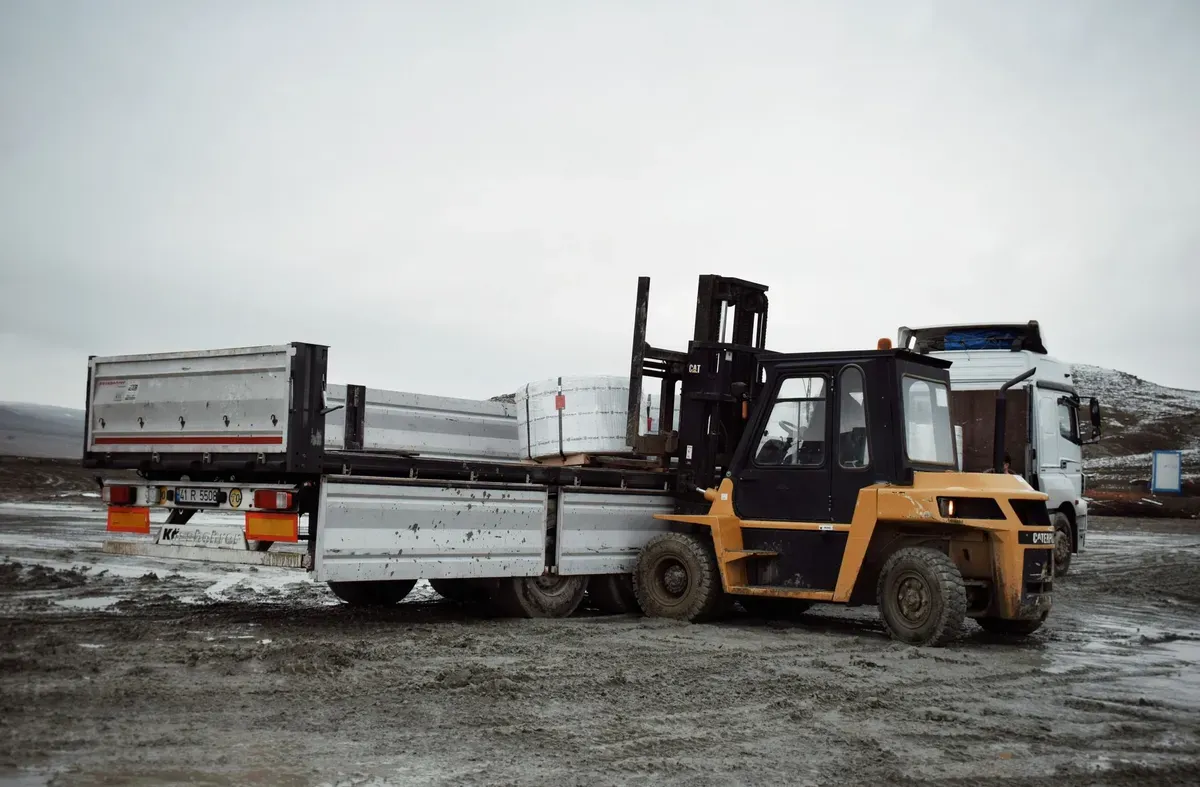
Transloading is where the risk concentrates. A direct truck on the Wuqia line transloads once, at Bukhara; a transshipment service does it more than once and takes five days longer. Every transload is both a customs event and a forklift event, and a forklift event can break a module without anyone noticing until the site opens the pallet.
Insurance deserves its own budget line. Cover typically runs 0.3–0.5 percent of CIF, under USD 200 on the trailer above. Two exclusions catch solar shippers repeatedly: insufficient packing and inherent vice — pack modules into a crate never rated for the load and the policy will not rescue you. Our cargo insurance services desk writes the cover with the breakage clause and transload schedule attached.
7. Transit Time: Factory Door to Tehran Yard
Plan on 21–23 days from the Wuqia crossing to the Tehran West Customs bonded warehouse on a direct truck, and 28–35 days from a coastal Chinese factory door to the Tehran yard once the domestic leg is added.
| Origin | Exit gateway | Days to Tehran customs area |
|---|---|---|
| Jiangsu, Zhejiang, Anhui (module belt) | Wuqia | 28–35 days door to yard |
| Shanghai / Yangtze Delta hub | Khorgos | 15–25 days border-counted |
| Shenzhen / Guangzhou | Wuqia | 17–25 days border-counted |
| Any hub, direct-truck service | Wuqia | 21–23 days from the crossing |
| Any hub, transshipment service | Wuqia | 26–30 days from the crossing |
Three rules matter for equipment cargo. Battery consignments add days at the border, not on the road — a missing UN38.3 summary turns a two-day stop into a week. Winter adds days on the mountain approaches. And modules are one leg of a project chain: a trailer that arrives before the racking is accruing yard storage, so sequence shipments against the installation plan. Our Wuqia vs Khorgos comparison covers the two exits.
8. When the Truck Beats Sea and Rail for Solar Cargo
The truck rarely wins on freight per tonne and usually wins on cost per delivered kilowatt — a project generating three weeks earlier earns back the difference, and a construction window does not wait for a vessel.
| Mode | Indicative cost | Transit | Best for |
|---|---|---|---|
| FTL truck | USD 3,000–5,000 per trailer | 21–23 days border to Tehran; 28–35 door to yard | Project cargo, mixed panel and storage loads |
| LTL truck | USD 2.50–3.50 per chargeable kg | 28–40 days door to yard | Spares, sample pallets, small rooftop orders |
| Rail | USD 3,500–4,500 per TEU + USD 500–800 handling | 12–20 days station to station | Full containers when capacity is available |
| Sea (Bandar Abbas) | 20ft from about USD 2,200 ocean freight, plus war-risk surcharge | 30–50+ days | Non-urgent bulk, buyers who can fund 60 days of float |
| Air (Tehran IKA) | USD 4.00–8.50 per kg | 3–10 days | Inverters, spares, warranty parts — never modules |
The sea option deserves a fair hearing: a 40HQ carries the same 720 modules a trailer does, and the ocean line is a fraction of the road’s. What it does not carry is certainty — war-risk surcharges and suspended direct calls add cost and weeks, and the inland haul from Bandar Abbas is a second booking. Our FCL shipping from China to Iran guide lays out the sea-side math. The rule that works: if the cargo is a project with a commission date, truck it; if it is distributor stock with a three-month horizon, the ship is still cheaper.
9. A Pre-Loading Checklist for Solar and Storage Shipments
- Get the build sheet and packed pallet weight in writing — dimensions, kilograms per pallet, pallets per trailer, two-tier stacking allowed or not. Give the supplier the trailer’s payload limit, not the container’s.
- Fix the battery classification before requesting quotes. UN3480, UN3481 or UN3536 changes the carrier pool, the trailer and the price. Collect UN38.3 summaries and MSDS at the same time.
- Get DG acceptance and the service grade in one document. Direct truck, one Bukhara transload, ADR-fitted trailer with fire-retardant partition, and an explicit statement that Class 9 cargo is accepted on this booking.
- Settle the importer of record, commercial card and SATBA route first, and have the HS classification and Persian datasheet reviewed by the broker before dispatch. Duty at 5 percent and duty at 20 percent are the same trailer and a different project budget.
- Specify packing, indicators and photography in the loading instruction, and buy breakage cover with the packing standard declared.
- Sequence modules, racking, inverters and storage against the installation plan. One early trailer and three late ones is not a logistics win.
10. FAQ
Q: How many solar panels fit on one truck from China to Iran? A: About 720 modules of 550 W — roughly 396 kWp — on a 96 CBM trailer, 20 pallets of 36 in two tiers. On double-glass product at 34 kg per module the 25-tonne payload binds before the floor space does, dropping the practical count to about 700.
Q: Can lithium batteries be shipped on the same truck as solar panels? A: Yes, but it becomes a Class 9 dangerous-goods movement: a carrier that accepts Class 9 in writing, an ADR-fitted trailer with a fire-retardant partition, UN38.3 summaries, MSDS, a DG declaration, and typically a 30 percent state-of-charge limit on standalone packs.
Q: What is the import duty on solar panels in Iran? A: About 5 percent to 30 percent, with 10–20 percent the working band for 2026 and 10 percent VAT on top. The rate moves with the tariff line (8541.43 versus the older 85414020 heading), the module type, and whether the consignment clears against a registered SATBA project. The spread on a 396 kWp trailer is about USD 7,400.
Q: How long does trucking solar panels from China to Iran take? A: 21–23 days from the Wuqia crossing to Tehran West Customs on a direct truck, and 28–35 days from a coastal Chinese factory door to the Tehran yard. Battery consignments add border days for DG review; December–February adds days on the mountain approaches.
Q: Is the truck cheaper than sea freight for solar modules? A: Not on freight per tonne — a 20ft ocean booking starts near USD 2,200, a trailer USD 3,000–5,000. It usually wins on landed cost per delivered kilowatt for project cargo, because it removes 30–50+ days of transit and the war-risk surcharge.
Q: Who can be the importer of record in Iran? A: An Iranian entity holding a commercial card — a foreign buyer cannot be. The entity, the broker, and for plant-scale cargo the SATBA licence and matching equipment list, must be settled before the goods leave China. Our customs clearance desk can arrange the Tehran broker as part of the booking.
Conclusion
Shipping solar panels & energy storage from China to Iran by truck comes down to three numbers and one document: about 720 modules and 396 kWp per trailer, USD 3,000–5,000 of linehaul plus USD 300–800 if batteries ride along, and a landed cost near USD 0.145 per watt once the Iranian tax stack lands. The document is the booking confirmation — service grade, transload count, DG acceptance, payload limit and packing standard, in writing before the seal goes on.
Efanda Logistics has moved cargo on the China–Iran corridor from Shenzhen since 2018, including Class 9 battery consignments and mixed solar loads, with every quote itemized from factory pickup through TIR linehaul to bonded handover at Tehran West Customs. Contact us at +86 18929345880 for a fully itemized trucking quote on your solar and storage shipment from China to Iran.

Written by the EFANDA Logistics team — a Shenzhen-based freight forwarder established in 2018, moving cargo from China to ports worldwide with end-to-end pickup, consolidation, customs and door delivery.About us