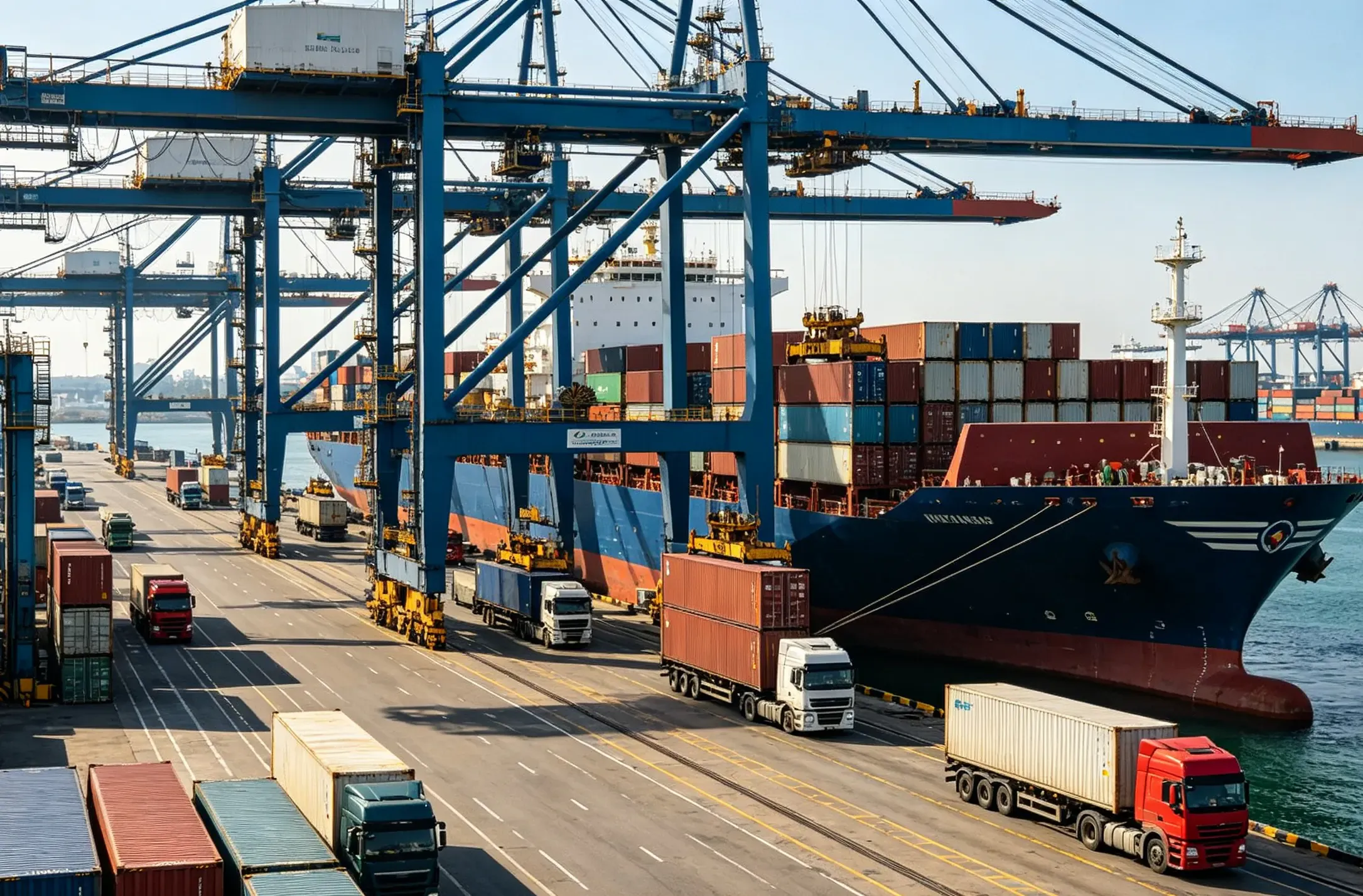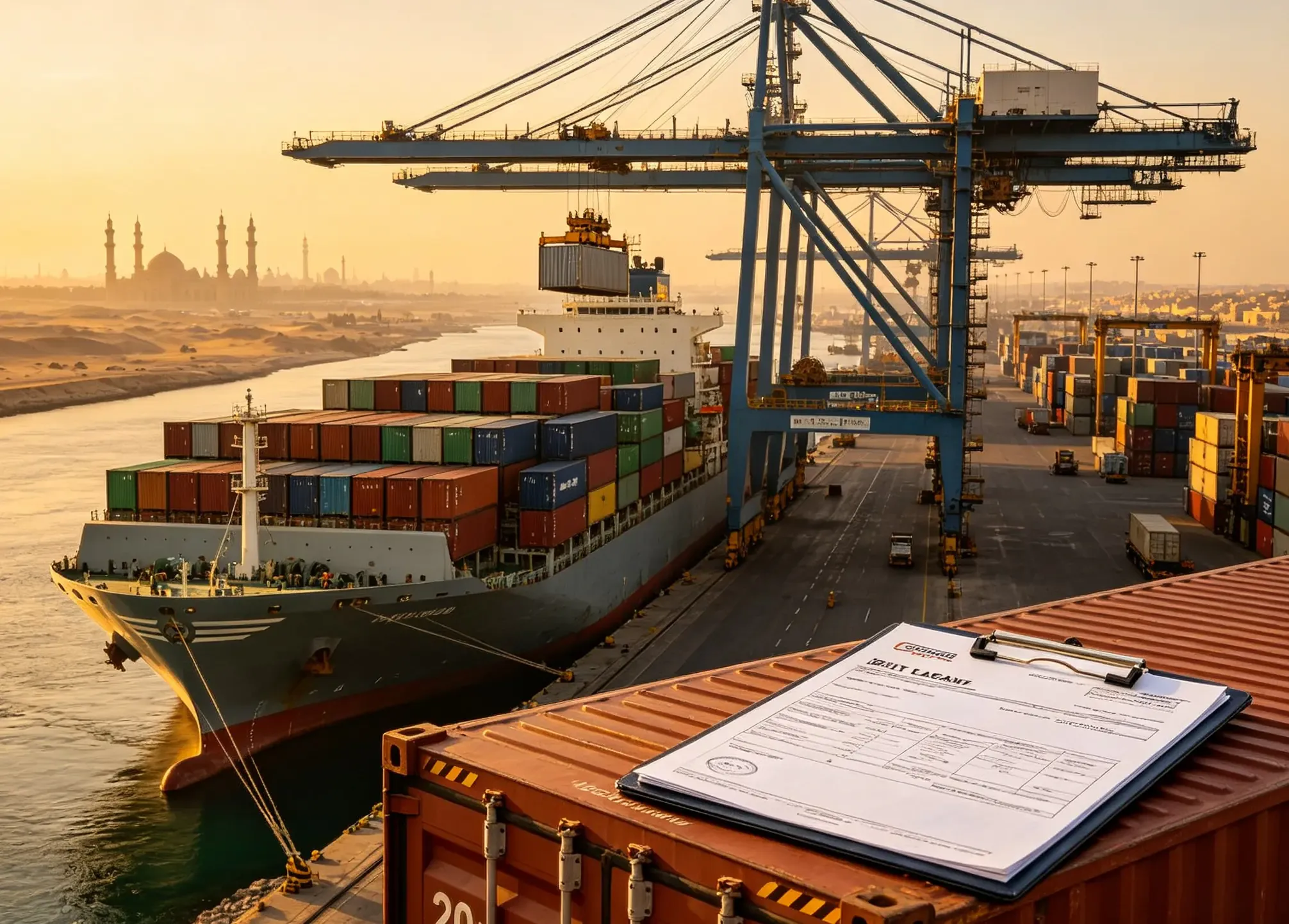
How do you move a container from a factory floor in Guangzhou to a warehouse in Tashkent without juggling three border crossings, two foreign languages, and a pile of customs paperwork you barely understand? Door-to-door shipping from China to Uzbekistan exists precisely to answer that question. Because Uzbekistan is one of only two doubly landlocked countries in the world, every shipment must clear China’s export customs, pass through Kazakhstan’s transit regime, and then clear Uzbek import customs — three legal borders before your cargo ever reaches its final address.
A true door-to-door service wraps all of that complexity into a single contract with a single logistics partner. In this guide, we walk through the full 7-step process, compare rail, road, and air freight on cost and transit time, expose what’s actually inside a DDP quote, and walk through the Uzbek customs rules — like UzStandard certification — that quietly decide whether your shipment clears in hours or sits in a bonded warehouse for weeks.
What Is Door-to-Door Shipping from China to Uzbekistan?
Door-to-door shipping is an end-to-end logistics arrangement where one freight forwarder takes responsibility for your cargo from the moment it leaves the Chinese supplier until it arrives at your nominated address in Uzbekistan. Instead of coordinating a pickup agent, a rail operator, a Kazakh transit broker, and an Uzbek delivery company yourself, you work with one partner and receive one quote.
The service is usually structured around one of two Incoterms 2020 terms, and knowing the difference matters:
- DDP (Delivered Duty Paid): The seller or forwarder handles everything — transport, export clearance, transit formalities, Uzbek import clearance, duty payment, and final delivery. The buyer simply receives the goods.
- DAP (Delivered at Place): The forwarder delivers to your address, but you act as the importer of record and pay Uzbekistan’s import duties and VAT yourself.
For buyers without a legal entity in Uzbekistan, DDP door-to-door is usually the practical choice — as long as your forwarder has a compliant way to manage import registration (more on that below).
The Door-to-Door Process: 7 Steps from Factory Floor to Tashkent
Every door-to-door shipment crosses the same seven checkpoints. Knowing these tells you where your cargo is — and where delays typically hide.

Step 1 — Pickup and consolidation. Your forwarder collects goods directly from the factory under EXW terms, or receives them at a consolidation warehouse in Shenzhen, Guangzhou, or Yiwu. If you’re sourcing from several suppliers, consolidating into one shipment before main haulage can cut freight cost by 30–50%.
Step 2 — Export clearance (China). Chinese customs declaration typically takes 1–2 working days. Reputable forwarders pre-screen your commercial invoice, packing list, and HS codes at this stage to catch declaration errors before they become border problems.
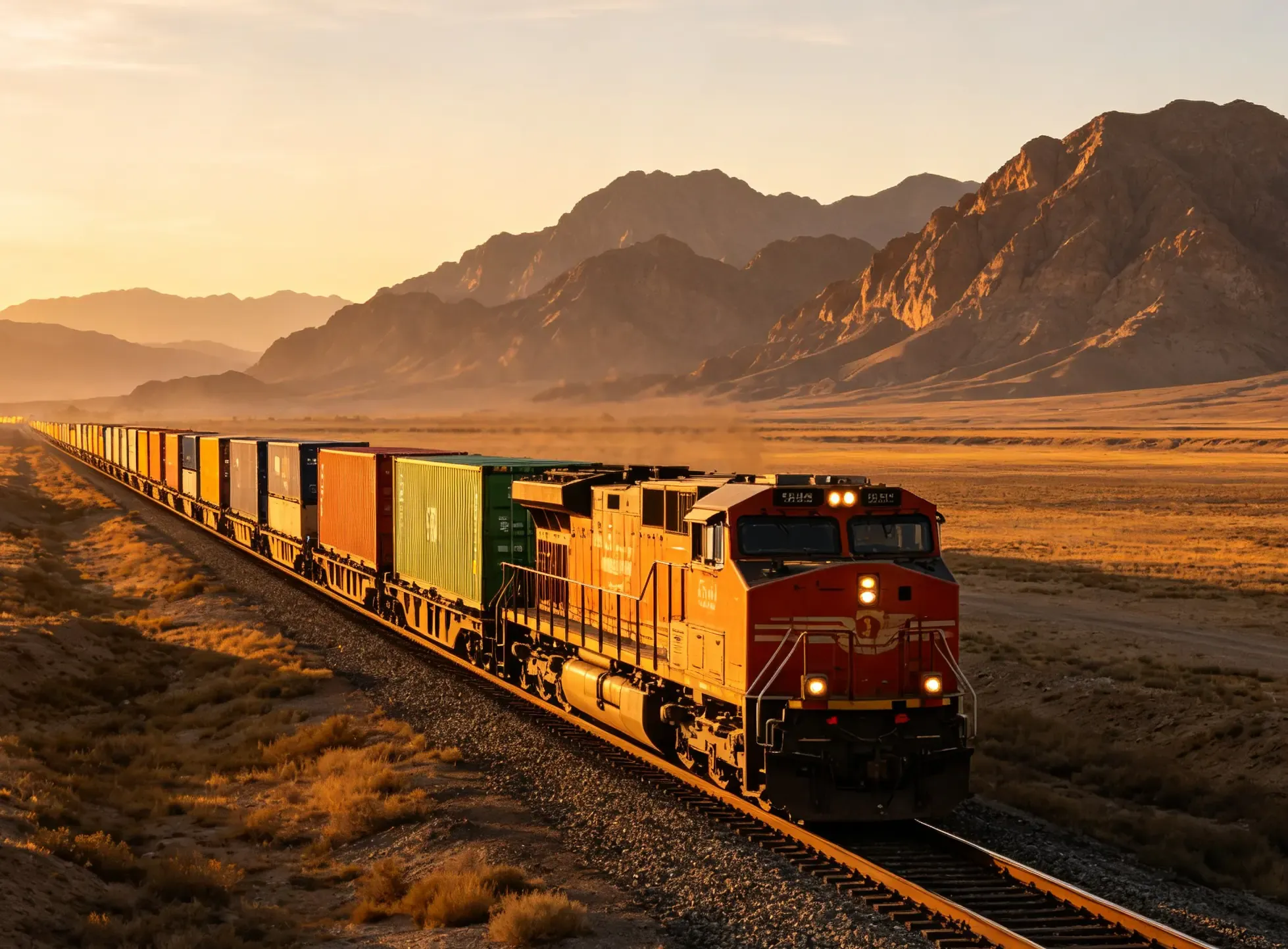
Step 3 — Main haulage. Cargo moves by rail, road, or air along the China–Kazakhstan corridor — the only practical land route into Uzbekistan. Rail dominates here: block trains from Xi’an, Chengdu, and Chongqing run on fixed schedules, and road freight under TIR seal handles the rest.
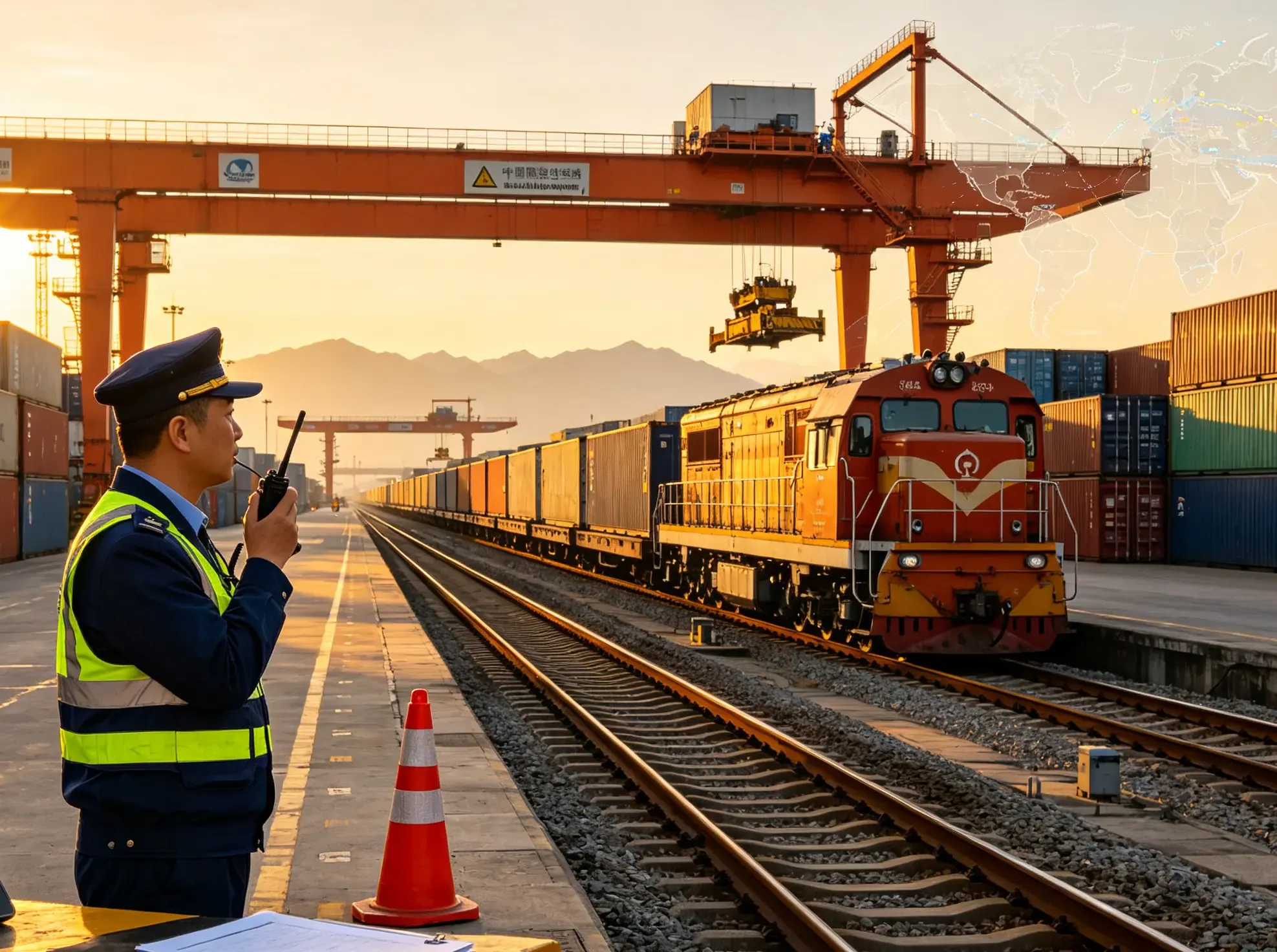
Step 4 — Border crossing and transshipment. Rail freight crosses at Alashankou or Khorgos into Kazakhstan. Because China uses standard gauge and Central Asia uses Russian gauge, containers are reloaded onto new wagons at Saryagach, the Kazakh–Uzbek border station. Road freight crosses at Khorgos, then routes through Almaty and Shymkent to the Gisht-Kuprik checkpoint.
Step 5 — Kazakhstan transit customs. Your cargo moves through Kazakhstan under a bonded transit declaration with seal checks. This is an often-overlooked stage: incomplete transit documentation here can stall a shipment just as badly as import paperwork.
Step 6 — Import clearance and duty payment (Uzbekistan). Declarations go through Uzbekistan’s Single Window customs system. With complete documents, clearance takes 3–7 working days; duty and the 12% import VAT are assessed and paid.
Step 7 — Last-mile delivery. Finally, cargo is trucked to your door — in Tashkent, or onward to Samarkand, Andijan, Fergana, or other regional cities.
Shipping Methods Compared: Rail, Road, Air & Multimodal
For most door-to-door shipments to Uzbekistan, rail freight offers the best balance of cost and speed — but the right mode depends on your cargo volume, deadline, and budget.

A few points the table doesn’t capture:
- Rail FCL block trains run on fixed schedules from Xi’an, Chengdu, and Chongqing. Direct trains reach Tashkent in roughly two weeks; the consistency is why rail has become the backbone of China–Uzbekistan trade. For a dedicated deep dive, see our guide to china to uzbekistan rail freight.
- Road freight under the TIR system (the international customs transit convention, using a TIR Carnet) keeps trucks sealed across borders, making trucking nearly as smooth as rail for door-to-door delivery — and far more flexible for destinations away from rail hubs.
- Air freight from China lands at Tashkent’s Islam Karimov International Airport, increasingly a Central Asian cargo hub. Remember that air freight is charged on chargeable weight — the greater of actual weight and volumetric weight (L × W × H ÷ 6000).
- Multimodal sea-rail routes via Iran’s Bandar Abbas exist for very heavy, low-value cargo — we cover how the ocean leg connects in our sea shipping from china to uzbekistan overview — but mid-2026 ocean rate surges made them largely uncompetitive versus rail.
One more thing to watch: the China–Kyrgyzstan–Uzbekistan (CKU) railway, currently under construction with official completion targeted around 2030–2031 and potential acceleration to 2028–2029, will bypass Kazakhstan entirely and is projected to cut transit times by 5–7 days. Shippers planning multi-year supply chains should track it — and note that the same China rail network already underpins rail freight from china to europe across dozens of destinations.
How Much Does Door-to-Door Shipping Cost? Inside a DDP Quote
A door-to-door DDP quote is a bundle of five distinct cost layers — and knowing them is how you spot hidden fees before they spot you:
| Cost Layer | What’s Included | Typical Red Flag |
|---|---|---|
| 1. Pickup & consolidation | Factory pickup, warehousing, palletizing | “Delivery to warehouse” charged separately per supplier |
| 2. Main haulage | Rail/road/air freight to Uzbekistan | Vague “linehaul surcharge” added after booking |
| 3. Customs handling (×3 borders) | Export, transit, and import declaration fees | Transit clearance billed as an unexpected extra |
| 4. Duties & taxes | Import duty (0–30% by HS code) + 12% VAT | Underestimated duty to make the quote look cheaper |
| 5. Last-mile delivery | Uzbek domestic trucking to final address | “Remote area” fees for cities like Samarkand |
The fourth layer deserves special attention. Uzbek import duty ranges from 0% to 30% depending on the HS code, and the 12% VAT applies on top. A forwarder quoting DDP with no questions about your product category is a forwarder planning to surprise you later — or worse, planning to undervalue your declaration. Uzbek customs maintains reference-price databases and routinely reassesses undervalued shipments, which can mean penalties, seizures, and a black mark on your importer record.
As of September 2026, rail FCL rates to Tashkent are roughly $2,500–$4,000 per 40ft container, road freight $1.2–$1.8/kg, and air $4–$9/kg. Treat these as market snapshots, not fixed prices — rates move with season, fuel, and volume, and a written all-inclusive quote is the only reliable number.
Uzbekistan Customs Clearance: The Compliance Deep Dive
Here’s the uncomfortable truth: most delays at the Uzbek border are preventable, because they stem from certification gaps rather than customs inefficiency itself. Average clearance with complete paperwork is fast; a missing certificate turns hours into weeks.
The essential document set: commercial invoice, packing list, transport document (rail waybill, CMR for road, or air waybill), certificate of origin (which can unlock preferential duty rates), and contract registration for commercial shipments.
UzStandard certification — the #1 trap. Uzbekistan is not a member of the Eurasian Economic Union, so an EAC certificate is not valid there. Regulated product categories — electronics, machinery, food, textiles, cosmetics, construction materials — require separate UzStandard conformity certification. Processing typically takes 4–8 weeks depending on product type and certification scheme (single deliveries can be faster), so it must start before your goods leave China. In our experience, this single issue has delayed more first-time shipments to Uzbekistan than customs holds, weather, and border queues combined.
Importer of record (IOR). Strictly speaking, DDP requires the seller to act as importer of record in Uzbekistan — impossible for most foreign companies without a local legal entity. In practice, compliant forwarders solve this through local IOR partners who become the legal importer of record on your behalf. If a forwarder offers “DDP” but can’t explain how they handle IOR, walk away.
5 Practical Tips for a Smooth Door-to-Door Shipment
- Start UzStandard certification 4–8 weeks before shipping (faster for single deliveries). Verify whether your product category is regulated on your very first order — not when the container is at the border.
- Consolidate at a South China or Yiwu hub before main haulage. Combining several suppliers’ goods into one shipment routinely saves 30–50% on freight.
- Choose the Incoterm that matches your import status. No Uzbek legal entity? DAP with a licensed local broker, or DDP through a forwarder with a compliant IOR arrangement.
- Build buffer time for winter. December–February snow in Xinjiang and Kazakhstan, plus holiday queues at Khorgos, can add 5–7 days to road and rail transit.
- Insure the cargo. For roughly 0.1–0.3% of cargo value, cargo insurance services cover the long, multi-border overland leg where risk concentrates.
How Efanda Logistics Handles Your Door-to-Door Shipment
Knowing what a good door-to-door service looks like is one thing — finding a partner that actually delivers it is another. You need a forwarder with working capability at all three borders, not just a cheap rate to the first one.
At Efanda Logistics, door-to-door shipping from China to Uzbekistan is a core service line, built from our Shenzhen headquarters since 2018. Our team manages factory pickup across Guangdong, Zhejiang, and beyond, consolidates cargo at our own warehouses, and runs rail, TIR road, and air freight through the Kazakhstan corridor to Tashkent and regional cities — with export, transit, and import clearance all coordinated under one roof.
We quote DDP pricing transparently, with each of the five cost layers itemized so you can see exactly where your money goes. Every client gets a dedicated logistics specialist who tracks the shipment across all three border regimes and flags risks — like a missing UzStandard certificate — weeks before they become border delays. To discuss your cargo, reach us at +86 18929345880 for a quote based on current market conditions.
Frequently Asked Questions
How long does door-to-door shipping from China to Uzbekistan take?
Rail FCL takes 12–18 days door-to-door, road freight 10–18 days, and air freight 3–7 days. LCL rail consolidation runs 15–25 days because of waiting time to group cargo. Winter weather and border queues can add several days, so build buffer into urgent orders.
What is the cheapest way to ship from China to Uzbekistan?
For full containers, rail FCL offers the lowest cost per unit at roughly $2,500–$4,000 per 40ft container. For smaller shipments, rail LCL at $60–$150 per CBM is usually cheapest. Road trucking becomes cost-effective for flexible door-to-door delivery to cities beyond rail hubs.
Can I ship DDP to Uzbekistan if I don’t have a local company?
Yes — but only through a forwarder with a compliant importer-of-record arrangement. Foreign companies without an Uzbek legal entity can’t act as importer of record themselves, so reputable DDP providers partner with licensed local IOR services to handle import registration legally.
What documents do I need to import from China to Uzbekistan?
At minimum: commercial invoice, packing list, transport document (rail waybill, CMR, or AWB), certificate of origin, and HS codes for each product. Regulated categories additionally require UzStandard conformity certificates, and commercial shipments need contract registration.
Is an EAC certificate valid in Uzbekistan?
No. Uzbekistan is not a member of the Eurasian Economic Union, so EAC certification doesn’t apply. Regulated products need separate UzStandard certification, which typically takes 4–8 weeks to obtain depending on product type and certification scheme.
Can I ship a car or new energy vehicle from China to Uzbekistan?
Yes. Vehicle exports to Central Asia have grown rapidly, and both rail FCL and road FTL handle cars, including new energy vehicles. You’ll need commercial invoice, packing list, certificate of origin, and conformity documentation, and duties apply based on the vehicle’s HS code and value.
What items are prohibited or restricted when importing into Uzbekistan?
Prohibited items include narcotics, weapons, and certain hazardous chemicals. Restricted categories — pharmaceuticals, medical devices, used electronics, and some food products — require special permits or certifications. Always confirm your product’s status with your forwarder before shipping.
Do you deliver outside Tashkent — for example to Samarkand or Andijan?
Yes. Door-to-door delivery covers Tashkent plus regional cities including Samarkand, Bukhara, Andijan, Namangan, and the Fergana Valley. Tashkent also works well as a distribution hub for onward transit to Tajikistan, Afghanistan, and Turkmenistan. (If Afghanistan is your final destination, we cover that route separately in our guide to door to door shipping from china to afghanistan.)
Conclusion
Door-to-door shipping from China to Uzbekistan succeeds or fails on three things: the right transport mode (rail for most volume cargo), complete compliance paperwork (UzStandard certification above all), and a forwarder who genuinely controls the chain across all three borders rather than handing your cargo off at each one. Get those right, and a doubly landlocked route becomes as predictable as any in your supply chain.
Ready to price your shipment? Contact Efanda Logistics for a transparent, itemized door-to-door quote based on current September 2026 market rates — and a logistics specialist who will follow your cargo all the way to Tashkent.

Written by the EFANDA Logistics team — a Shenzhen-based freight forwarder established in 2018, moving cargo from China to ports worldwide with end-to-end pickup, consolidation, customs and door delivery.About us